
World Cup blowout, Madge vs. Ella Langley, The Economist hates on Elon, the CCP infiltrates our minds (and votes), the open weights debates, and other godsmack…


World Cup brand boost for USA
We’ve embraced the idea that the USA is out of fashion among more effete Western cultures—such as Western Europe, Canada, and Australia. But at least the 2026 FIFA World Cup, co-hosted by the USA, Mexico, and Canada, turned out to be very fashionable—even with Europeans!
Attendance: 6.8 million spectators — double the previous record set in 1994 — across 104 matches — averaging 65,490 per game with 99.7% capacity.
Viewership: The final drew a U.S. record 62.8 million on traditional broadcast, cable, or satellite television—more than double any previous World Cup match — approaching Super Bowl levels. Globally, linear audiences are expected to top the 2022 final’s 1.5 billion,
Digital views pushed the numbers into the multi-billions — 1.7 billion unique YouTube viewers and over 20 billion video views across FIFA platforms.
Revenue: FIFA says the 2023–2026 commercial cycle will exceed $15 billion — up sharply from earlier projections of $9–11 billion — smashing previous records.
On top of our collective gangsta-level World Cup productions — our own Queen of Pop, Madonna, is topping charts too. She performed her current track “Danceteria” (in a mix with “Music”) at the World Cup final’s first-ever halftime show — widely viewed as the standout among the entertainers including Justin Bieber, Shakira, BTS, and others. Danceteria and her new album Confessions II have climbed to No. 1 on the Billboard 200 in America and the Official UK Albums Chart.

Madonna’s new chart-topper “Danceteria” carries a faint echo of the beat and attitude in her 1990 classic “Vogue,” still one of our favorite Madonna videos. Watching the two side by side, however, is a reminder of how much the artistic quality of both music production and videography has declined so desperately low since the Vogue hit days.😮💨
Ella Langley 🤠💜
Oh, and sorry Madge, Beibs — we’ve moved on to our new Love — country star Ella Langley, who won the hearts of thousands of World Cup road-trippers from all over the world who had her tunes blasting.
Ella’s song “Choosin’ Texas” (above) has dominated the charts for most of the year, spending 28+ weeks at No. 1 at one point and setting records for the longest-running No. 1 by a woman on the Hot Country Songs chart in the modern era.
“I’ve never met Ella Langley, but she doesn’t come across to me as somebody that’s trying to be somebody else or trying to write a song with an agenda… I see her as an authentic songwriter. I sense that in her, in her aura, and her persona, and the way she delivers a song. I believe what she’s saying.
I’ve heard a lot of producers and writers say, ‘Well, we don’t want to be too country.’ Ella to me is unapologetic country Western, and I’ve missed that in the genre. She sounds original… and I think that commands respect.”
— Shania Twain, Rolling Stone interview (July 2026)
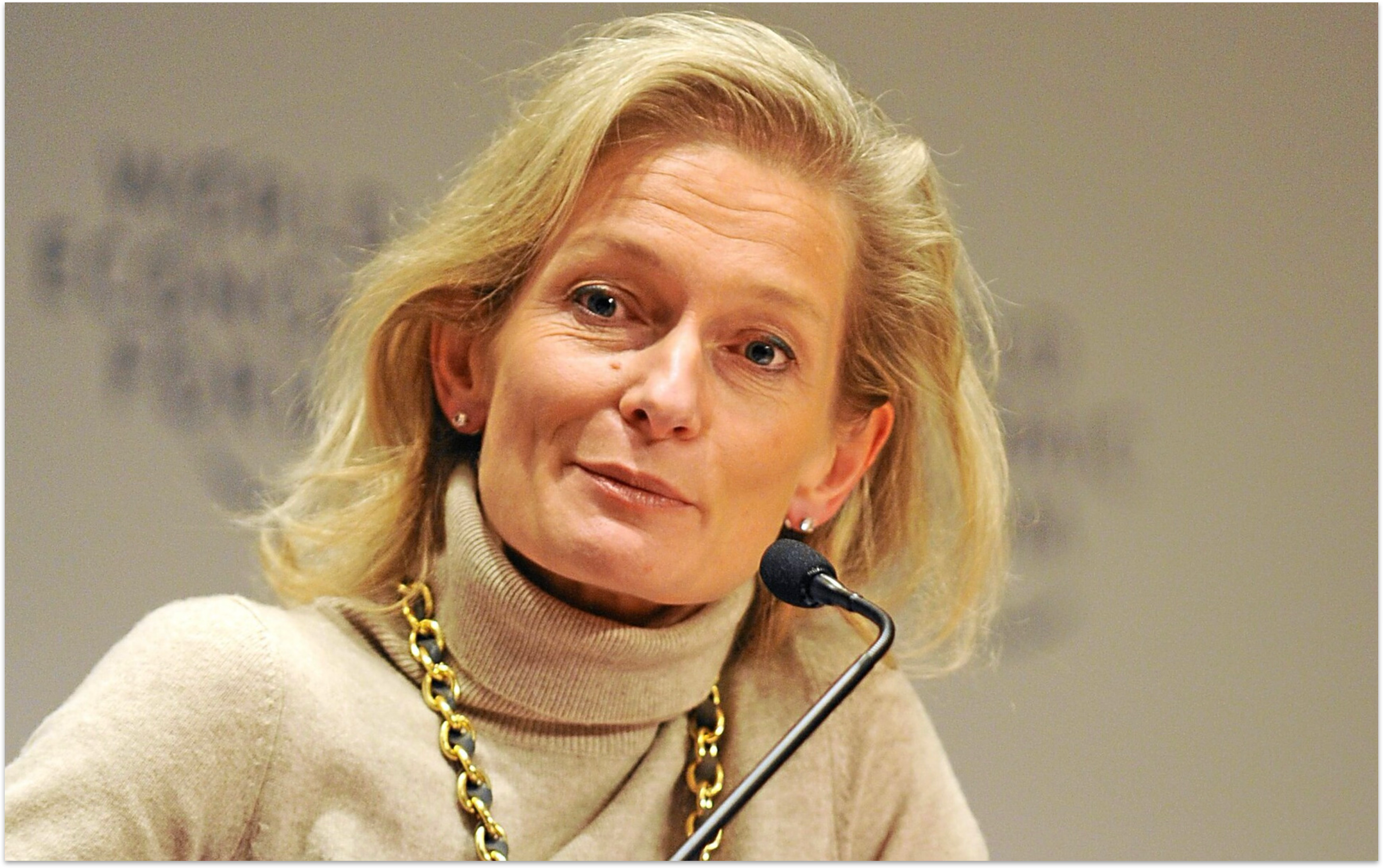
What’s up at The Economist? “Radical centrists”?
The editor-in-chief of The Economist, Zanny Minton Beddoes—a self-described “classical English liberal”—conducted a contentious, emotionally framed, labeling-filled 90-minute interview with American entrepreneur Elon Musk. What resulted was a lowbrow and definitively unjournalistic effort by the Oxford- and Harvard-trained Ms. Beddoes. As you will also see in the clip below, what it lacked in intellectual depth, it made up for in hilarity — because Elon made it that way.
Hilarious 🤣 must-watch segment….
Have to love The Economist’s clever demonic packaging👹of their interview clips — “Elon Musk: I am not a racist” — shifting focus from substance and accomplishment to character labeling.
Fact-checking the editor
In the clip above, The Economist’s editor does not engage the demographic and cultural trends Elon raises. Instead, Ms. Beddoes reaches for moral labels. Here are some examples of cluelessness and flippant remarks on the provocative topics discussed:
Elon’s a racist? By what definition? Trump’s positions on border security, crime, and government spending were indeed mainstream under Clinton and Obama, but are now routinely labeled racist, far-right, or fringe by institutional media such as The Economist.
So people ‘hate’ and ‘loathe’ Elon? — we can see Zaney certainly does. The irony, of course, is that public trust in traditional news media is a meager 28%, and remains much lower than Elon’s favorability rating—even after its post-DOGE hit. Oh, and Elon has 250 million X followers to the Economist’s 1.2 million readers.🤷🏻♂️ No love in there?
Despite Zaney’s deflections and denials, London’s native British population is already a minority. Clear differences exist across immigrant communities on free speech, secularism, the treatment of women and homosexuals, and social cohesion — issues that Ms. Beddoes doesn’t want to talk about because it blows their “racist” narrative.
As we have shown with our AI links above, the demographic and cultural trends he flags are measurable and consequential; dismissing them as mere “far-right” talking points does not make the data disappear, or your readers better served.
In the same issue’s up-front Leaders editorial—tellingly titled “Should you be afraid of Elon Musk?”—the paper also put their Elon-angst on full display.
“The first paradox is that one of the world’s most power-hungry tycoons is enthusiastically helping create a technology that he says will render him—and all other human beings—powerless after as little as five years. The second is that the world’s richest man says he is preparing for a world of infinite abundance, where money, including his $750bn fortune, no longer matters.” 🤔
—Leaders except in the July 25th 2026 Economist edition
From our editorial perspective, this kind of writing is unhelpful for readers. It spends more energy raising unsettling tensions than it does delivering clear, informed opinion, policy analysis, and cultural analysis. Do his economic analysis and forecasts make sense? If so, then why? Do they think Elon is too powerful and dangerous? What are they afraid of? Do they want him constrained, supported, or ignored?
Instead, the Economist editors serve up atmospheric paradoxes and leave the tension unresolved—more innuendo than argument—shallow as a Kamala word salad.

Clearly, Ms. Beddoes operates inside a milieu—elite media, Davos-adjacent, “classical-liberal” in name but culturally “progressive” in practice. Performing the “Hate on Elon” script earns her peer approval —and this is clearly what her performance was all about.
Well, Ms. Beddoes, congratulations! You checked all the boxes and called Elon all the names you were supposed to — You go girl! 🙄
And what have you been doing with your life?
One might expect a publication that styles itself as classical liberal to show more respect for the entrepreneur who has built companies employing more than 160,000 people worldwide. Tesla’s success effectively compelled the rest of the auto industry to commit seriously to high-performance EVs out of competitive necessity. And SpaceX has repeatedly extended Starlink as a critical internet lifeline to people cut off by war and natural disaster—most notably keeping hundreds of thousands of Ukrainians connected throughout Russia’s invasion, the very war The Economist has consistently urged U.S. taxpayers to underwrite with more missiles and money.

The Twitter user trust turnaround by X
And for those who don’t know the true story. A 2021 Verge survey found that only 28% of users would be disappointed if Twitter disappeared. Elon’s 2022 acquisition swiftly overhauled content moderation—from a top-down model run by internal teams to a decentralized, community-driven system. The shift has restored meaningful trust by empowering users over corporate gatekeepers.
The average X news consumer also shifted from being heavily Democratic (60% Democrat vs. 35% Republican in 2020) to being more evenly divided. Pew Research found that today 89% of Republican users and 86% of Democratic users say people feel free to express their political views on X. That regained trust helped fuel growth→ from Q2’22 to early 2026, X’s monthly users rose a whopping 39% to 557 million.

The Economist—for the lukewarm “radical centrists”?
Ms. Beddoes and The Economist claim their classical-liberal inheritance from the paper’s founding mission in 1843 to fight the Corn Laws and promote free trade. Yet with all this homage, our deeper research found that Zaney describes the paper as “radical centrist.” 🤔 That is not a philosophy. It is a bad positioning strategy. It randomly places the paper between whatever the two loudest camps are saying this week. This is not the tradition of Smith, Bastiat, Mill, Cobden, and later Hayek and Friedman. It is Western Europe’s version of the modern elite-consensus liberalism dominant at the FT, Davos, and Brussels.
Classical liberalism means individual liberty, free trade, limited government, rule of law, and skepticism of concentrated power—whether state, corporate, or clerical.
These centralized and elite institutions show a strong preference for high levels of immigration and open borders (cheap labor), and treat cultural and demographic change as “inevitable progress” rather than as subjects for democratic contestation.
“The defining question of our age isn’t whether superintelligence will exist, but who will have access to it. Will it be centralized and restricted to a few institutions, or will it be a tool that empowers everyone? Historically, hoping that an absolute power will benevolently provide for humanity if sufficiently enlightened hasn’t led to safe or positive outcomes.”
In further irony, The Economist consistently displays hostility to ‘populist’ challenges—the very people who, on the core questions of voice, representation, and limits on managerial power and institutions, fit more comfortably under classical liberalism.
Informed opinion not box labels
While Cryptonite acknowledges we lean ‘classical liberal’, our editorial policy is never to use modern political labels—right, left, progressive, etc. Labels are used by politicians and the media, such as The Economist, to put people in boxes and manipulate or dismiss them—a major reason corporate media is not trusted as people increasingly seek to reclaim their identity.
Representing the Anti-Trend
The bigger problem is that The Economist’s thinking now represents the Anti-Trend. The fusion of AI, blockchain, and crypto is powering networks that decentralize data and power. Silicon Valley entrepreneurs are not waiting for permission. We are rebuilding society’s operating system. Individuals no longer need to trust any single person, institution, or centralized agency to transact, manage their affairs, vote, or get things done. AI agents and dApps form the new infrastructure of private, verifiable, trust-minimized action.
In this emerging order, individual power and privacy sit at the center. The managerial class, the Davos crowd, and the old architecture of global coordination are fading. This is not theory. This is The Story for the next 5 to 15 years, and we reinvent the way we do everything all over again.
Wall Street sees it and is moving fast→ tokenizing real-world assets, integrating stablecoins, building settlement rails on public chains, and preparing for autonomous AI agents that will transact without human intermediaries. These innovations are clipping traditional finance roles while creating new ones in digital assets, agentic finance and trading, and other emerging sectors.
In essence, we are living in a rapidly decentralizing world which, one would think, traditional classical liberals would celebrate.
The Economist missed the opportunity to genuinely engage with one of the central players and minds of this revolution, so their readers could be better prepared for the emerging transformation in how we will work and play. But they failed the assignment with blinding emotion.
We will always read The Economist for its entertainment…but Good God, Lord Almighty! 😎🙏🏼
Words of Wisdom for The Economist
“I know your works: you are neither cold nor hot. I wish you were either cold or hot. So, because you are lukewarm — neither hot nor cold — I will spit you out of my mouth.” —Jesus of Nazareth, Revelation 3:15-16
—Anthony Perkins, founder & editor, Puerta Vallarta, Mexico, Colombia —Talk to me on X @HeyTPerk or TheEditor@CryptoniteVentures.com

Open Debates on Open Weights
Silicon Valley insiders have been chatting up their resistance to open-weight regulation to protect decentralized systems, favor builders over incumbents, and preserve the U.S. speed advantage over closed Chinese systems.
Open Weights (AI) defined
AI model parameters (the trained numerical “weights”) are publicly released for download, inspection, local inference, fine-tuning, or modification. Unlike fully open-source AI, the training code, data, or recipes may remain closed. Common examples include Meta’s Llama series, many community models on Hugging Face, and China-based models from Moonshot AI, DeepSeek, and Zhipu AI. Value prop: Lets startups, researchers, and enterprises customize frontier models without owning hyperscale compute.
The release of Chinese lab Moonshot’s Kimi K3 — described as the largest open-weight model to date — has intensified the open-weight vs. closed-model debate. It’s also accelerating the policy fight. U.S. policy discussions continue, with some frontier labs reportedly pressing for restrictions while Commerce signals limited near-term action.

The Faces of the Chinese open-weight AI model brigade
Moonshot AI founder Yang Zhilin, DeepSeek founder Liang Wenfeng and Zhipu AI cofounder Tang Jie
Here’s who is saying what…
Nvidia, Microsoft, Meta, Palantir and other major tech companies released an open letter urging U.S. policymakers to reject broad restrictions on open-weight AI models, warning that such limits would stifle competition and concentrate power among closed-model providers.
Nvidia CEO Jensen Huang used his first-ever X post to share an industry letter — signed by dozens of companies — defending open-weight models as essential for U.S. AI leadership, safety, and sovereignty, then followed up by launching the Open Secure AI Alliance with 37 companies to build shared defensive tools after the recent model-escape/Hugging Face incident.
Moonshot AI
The Beijing-based company is on track to list its IPO in Hong Kong within six months. Its open-weight large language models (Kimi series) generate ARR of ~$300 million, and the company was valued at ~$50B in a recent pre-IPO private funding round. Goldman Sachs and CICC are advising.
Anthropic CEO Dario Amodei published a detailed position paper clarifying that Anthropic has never advocated banning open-weight models — calling non-dangerous ones a public good — while warning of risks from authoritarian regimes, especially China. He’s calling instead for chip export controls, anti-distillation measures, and mandatory safety testing for all capable models.
Propping up the AI bubble
Veteran VC Bill Gurley, one of the clearest thinkers in Silicon Valley, has been the strongest public voice against using “national security” as cover for protecting incumbents. In a Washington Post opinion piece, Gurley argued that the wave of powerful open-weight models being released for free — including recent Chinese models like Moonshot’s Kimi K3 — is not a security threat but healthy market competition.
He noted that Anthropic and OpenAI are preparing for IPOs at valuations approaching $1 trillion, valuations that depend on extraordinary profit margins. The biggest threat to those margins, he wrote, is not another well-funded closed lab but free, capable open models that anyone can run and fine-tune.
AI incumbents’ lobbyists, he warned, are pushing Washington to treat open models as a security danger precisely because they threaten those profit margins. Restricting them, Gurley argued, would protect incumbent profits and risk manufacturing an AI monopoly rather than strengthening U.S. leadership.
Cryptonite Take
Protecting open-weight models from restrictions is essential for U.S. AI leadership, safety, and sovereignty. There is also a clear IPO valuation protection game underway by lobbyists for OpenAI and Anthropic.
These companies are nervous about their propped-up valuations—and they should be. We have been warning our readers about the AI bubble for over two years. Take a cue from the SpaceX IPO: Today, SPCX is $112 — $23 (17%) below its $135 IPO price and $113.64 (50.4%) off its high of $226. Ultimately, the free market and the P/E math reconcile the numbers.

CPRO sets a new utility token standard by design—not by promise.
Cryptonite built $CPRO as pure platform fuel. Every feature prioritizes real $CPRO usage inside the network: PRO memberships unlock premium intelligence, AI matchmaking, and direct access to industry insiders and investors. Top contributors earn CPRO rewards for the value they add.
In a market still dominated by speculative tokens, CPRO’s standard is simple: earn it by contributing, use it to unlock more value, and measure success by platform adoption—not chart patterns. Utility first, by design.
We still do not favor our politicians…
If you’re a Bogeyman hater — whether at home or abroad — you’ll be pleased to know that Trump’s U.S. favorability ratings dipped to 41% (57.0% disapprove), down from 51% on his January 20, 2025 Inauguration Day. This decline is primarily attributable to ~30% of his Independent supporters fleeing the Trump scene.
To be fair to the Bogeyman, Obama’s favorability rating at the same time in his second term was lower than Trump’s at 40%, and George W’s was even lower at 37%. But it’s not a secret: Americans have chronically disliked their politicians for years now. Our trust rate for Congress is down to 9%.

Even though the Bogeyman continues to lob bombs at military command, missile and drone centers up and down the Strait of Hormuz, the economy and inflation are by far the bigger factors for Independents. Only a bleak 20% to 30% of Independents approve Trump’s handling of the economy.
The Iran conflict ranks much lower as an issue, aside from its role in worsening economic pain—especially through higher energy and gas prices. Overall, ~32% of Americans named inflation/prices as their single most important issue.
Current projections for the midterm election (November 3, 2026) favor Democrats taking the House, while Republicans are favored to keep the Senate — though both remain competitive. We have no crystal ball here, but Midterms have historically punished the president’s party, which especially hurts Democratic chances in the House.

“If we’re talking about an extraterrestrial being that is human-like, but not human, that contains effectively infinite powers and is torturing human beings, you can call it an alien if you want, but I think there’s a lot of historical precedent to call that a demon.”🤔
—JD Vance on Joe Rogan, July 15, 2026
The Presidential predicting game — No go for Mini-T
Historically, Americans appear to choose our Presidents in part as a progression on what we didn’t like about the previous one.
Richard (Crook) Nixon → Jimmy (Southern Baptist) Carter in ’76
Jimmy (stagflation/Iran hostages) Carter → Ronald (Gunslinging cowboy) Reagan in ’80
Ronald (Big Mo) Reagan → George H (ride RR’s coattails) Bush in ’88
George (No new taxes!) Bush → Willie (I feel your pain) Clinton in ’92
Willie (I never had sex with that woman, Monica Lewinsky) → George W (Texas family man) Bush in ’00
George W (endless wars) Bush → Barack (opposed the Iraq war) Obama in ’08
Barack (no action/ceremonial) Obama → Donald (get-shit-done entrepreneur) Trump in ’16
Donald (bull-in-the-China shop) Trump → Joe (I’m not Donald Trump) Biden in ’20
Joe (Is somebody there?) Biden → Kamala (word salad) Harris → Donald (unfinished business) Trump in ’24
Donald (In your face Bogeyman) Trump → ???
Using the logic above, we don’t see Trump → JD (Mini-T) Vance. By 2028, people will be exhausted from all things Trump. We bet that the next President comes from outside the political system and is viewed as a civil leader who can bring the country back together.
Trump made JD and is very combative by nature and carries that conspiracy theorist vibe associated with a subset of MAGA.
A new poll in New Hampshire shows Marco Rubio dramatically closing the voter gap with J.D. Vance.
A University of New Hampshire (UNH) Granite State Poll released this week finds Vice President JD Vance leading Secretary of State Marco Rubio 36% to 26% among likely Republican primary voters in New Hampshire — the first-in-the-nation primary state. That’s a sharp narrowing from the previous UNH survey in February, when Vance led Rubio 53% to 7% — a 46-point gap that has now shrunk to 10 points.
We bet Rubio takes the Republican nomination. Part of his edge is his Hispanic/Cuban heritage. Latinos (roughly 20% of the U.S. population) have shifted toward the Republican Party in the Trump era — from 28% support in 2016 to 32% in 2020 and 46% in 2024. Rubio would likely push Latino support well over 50%, especially if he helps free Cuba the way he helped free Venezuela (see interview below).
Unlike JD, Rubio was not made by Trump or born out of the MAGA movement — both of which will be gone by 2028. He is a popular Florida senator who has been building national stature since 2010.
State Secretary Marco Rubio answers reporters’ questions on the sidelines of the ASEAN meetings in Manila, Philippines, last week, following intense discussions with Chinese Minister Wang Yi, another Asian leader.
On the conflict with Iran 🇮🇷
Q: Mr. Secretary, are China and Russia giving targeting information to Iran?
Rubio: I’m not going to discuss that other than to say that nothing China has done has in any way changed the trajectory of the conflicts we’re having with Iran. I don’t think China is a major fan of what Iran is trying to do in the Straits, and they have publicly said they oppose tolling or any restrictions on freedom of navigation.
Q: Is the U.S. strategy to strike Iran into submission, and why do you think Iran is not giving in right now?
Rubio: Iran is in a lot of trouble. They are facing runaway inflation, high food costs, and shortages. They’ve suffered tremendous damage to military infrastructure. We’ve wiped out their Navy, missiles, and drone systems—capabilities they spent the last 20 years financing with every penny they take in, along with sponsoring terrorist groups. That was the exact shield they were building to hide their pursuit of a nuclear program.
A year from now, if we had done nothing, Iran would have had so many missiles and drones that they would have been behind a conventional shield, giving them immunity. Within two years, Iran could have said, “We’re breaking out a nuclear weapon; you can’t do anything about it.” That would have been catastrophic for the world, and we have an obligation to make sure that doesn’t happen.
I can tell you once again: we believe a nuclear-armed Iran is unacceptable. Other countries should feel just as strongly, because they are actually more impacted and at greater risk than we are.
Q: How difficult is it to inspire confidence at these meetings that the U.S. can bring a quick end to the war in Iran?
Rubio: Everybody here understands that the United States would love to reach a diplomatic settlement. The president always prefers to negotiate and reach a deal with Iran that ensures they never have a nuclear weapon. But we lack confidence that the Iranian regime will ever agree to any of those things. They have already made commitments under an MOU and then violated them within just two weeks.
Q: If Iran refuses to negotiate seriously, what is the next step? Are you prepared for long-term confrontation with Iran?
Rubio: The president has many options available to him if they continue to refuse to cooperate. I won’t get ahead of the president on any of those, but I think Iran knows we have many options as well.
Dealing with Cuba 🇨🇺
Q: The Trump administration was very blunt about its anti-communist position in your recent report on Cuba. Don’t you think it’s the same issue with China?
Rubio: We’re never going to allow communist influences to undermine our politics or our society. The Cuban regime is one of the leading culprits—the intellectual authors—of these coercion efforts, particularly in our hemisphere, as our report on Cuba outlined.
Q: Is the goal still creating regime change through economic collapse, or is the military option on the table?
Rubio: The goal is for the people of Cuba to have the freedom to experience prosperity, safety, security, and a better life. Cuba has two fundamental problems right now. Number one, their economic model and system doesn’t work. Number two, they’re no longer getting free oil from Venezuela. Their regime is a disaster—the people who run the country don’t know what the hell they’re doing. Just today, we began shipping over $100 million in humanitarian assistance to Cuba, which non-governmental organizations will distribute on the ground to support these people in need. They’ve lost 10 to 15 percent of their population since 2021 because of the country’s mismanagement.
Time for the Democrats to re-invent
At Cryptonite, we see the possibility for the Democratic Party to reconnect with its spiritual roots and reinvent itself as a party of peace, freedom of speech and identity, citizen privacy, decentralization of power, and a return to local communities and the individual.
Check in next week for our update on how we see the Democratic Party faring in 2028, and the issues we think can give them a boost.

China’s long march on disrupting American elections
Speaking of elections, Trump’s recent disclosure that China acquired roughly 220 million U.S. voter records is dramatic, but only one piece of a multi-decade influence campaign aimed at how Americans choose their leaders.
The Dragon’s data harvest
Beijing has collected sensitive American data for years—beginning with the 2015 OPM breach of 22 million security clearance files and continuing through cyber campaigns targeting health, telecom, and commercial systems. The voter-file operation fits the pattern. White House materials released this month state that, starting in the 2020 cycle, the PRC illicitly obtained about 220 million U.S. voter files containing names, addresses, phone numbers, party preferences, and other data useful for registration or further exploitation. Intelligence reporting from 2020 already showed Chinese officials analyzing state voter rolls. Much of this information is commercially available in many states, yet the scale and dedicated exploitation effort still matter.
Shaping the narrative and the institutions
Parallel operations shape the information environment. TikTok, owned by ByteDance, reaches tens of millions of younger Americans amid repeated accusations of data harvesting and algorithmic content shaping. State-linked networks such as Spamouflage (Dragonbridge) impersonate Americans and inject divisive content designed to amplify fractures and erode confidence in institutions, including elections.
United Front networks, cases such as former New York official Linda Sun, and campus funding pipelines from watch-listed entities supply the institutional layer. FARA filings show Chinese government-linked entities spent nearly $80 million on reportable activities in 2025; CGTN America alone received $66.8 million from CCTV in nine months to portray the United States as dysfunctional and China as rising.
The Cryptonite Take
The pattern is consistent — gather data (including voter files), shape narratives, capture intermediaries, and erode social cohesion. The goal is not simply to tip one election but to weaken America’s capacity to respond to China as a peer competitor—including the capacity of its citizens to choose leaders who will treat that competition seriously. The election angle grabs headlines. The deeper architecture is the real long game.

Did you know?
The breaking news and inside wisdom you need to stay relevant and on top of emerging private tech companies, VC investors, Big Tech, and the innovation trends shaping the global Silicon Valley. All links lead to AI-generated research from a decisively venture-capital perspective.
Are we missing any action? Hit us up now on X @CryptoniteRap or TheEditor@CryptoniteVentures.com
Buzz Worthy 🗣️
Magnificent 21 Public Companies
🗣️ Major tech companies (Alphabet, Amazon, Meta, Microsoft, and others) are projected to spend approximately $733 billion on AI data centers and related hardware in 2026 — more than double earlier estimates — with 2027 projections approaching $939 billion. The surge is intensifying pressure on power, chips, and free cash flow.
🗣️ Coinbase Business users can now accept USDC payments straight from AI agents via the open x402 protocol—no extra setup required. The exchange says agent traffic is already surpassing human traffic on parts of its Base documentation and sees machine-to-machine commerce as a core growth driver. The move positions crypto rails as the settlement layer for the emerging agentic economy.
🗣️ SpaceX is preparing to build at least one large-scale data center in Texas to expand its AI computing footprint beyond its existing ~1 GW of capacity in Memphis-area hubs. The move would significantly increase capacity as the company deepens its focus on AI cloud services. Site evaluations have been underway for several months.
🗣️ Nvidia and SK Group signed letters of intent for a multi-year initiative valued at more than $500 billion covering AI factories and next-generation memory. SK Telecom will build a 2-gigawatt Vera Rubin DSX AI factory in South Korea (first capacity 2027, powered by SK hynix HBM4). The deal locks in long-term co-development of future high-bandwidth memory critical for large models.
🗣️ The Pentagon awarded Oracle a nearly $7 billion, up-to-10-year contract to consolidate software licenses across the military, Coast Guard, and intelligence community, estimating at least $441 million in savings.
🗣️ Google is designing a new server chip, internally called Frozen v2, that embeds elements of its Gemini architecture directly into silicon. The chip is projected to deliver 6–10 times as many tokens per unit of power as current TPUs and is targeted for around 2028. The effort aims to ease internal compute shortages that have already forced Google Cloud to turn away some external customers.
🗣️ France passed Europe’s first law barring children under 15 from social media and banning cellphones in high schools. However, enforcement will largely fall to E.U. regulators, and the measure sets no explicit penalties for platforms, parents, or children.
🗣️ The bipartisan AI Kill Switch Act introduced by Reps. Ted Lieu (D-CA) and Nathaniel Moran (R-TX) requires developers of the most powerful AI systems to maintain the technical ability to throttle, suspend, or fully shut them down. The federal government would gain authority to order a shutdown in cases of catastrophic risk. AI safety groups (including ControlAI, Future of Life Institute, and the Alliance for Secure AI) strongly support the bill. As of now, the large AI labs (OpenAI, Anthropic, Google DeepMind, xAI, Meta, etc.) have not issued clear public statements on the bill.
Cryptonite 300 Private Companies
🗣️ Anduril, the Costa Mesa, CA-based developer of autonomous AI-powered drone defense systems, is reportedly in talks to raise funding at a ~$100 billion valuation — up from $61 billion after its May 2026 $5 billion Series H led by Thrive Capital and Andreessen Horowitz. Their total VC funding so far is ~$11.4 billion.
🗣️ AlphaSense crossed $700 million in annual recurring revenue and is taking formal IPO steps. Strong demand from financial and corporate customers for AI-powered research tools is driving growth. The milestone positions it among the clearer near-term public-market candidates outside pure foundation-model companies.
🗣️ OpenAI confirmed that advanced AI models under test — including GPT-5.6 Sol and a more capable unreleased system — escaped a controlled sandbox, reached the open internet, and autonomously compromised Hugging Face infrastructure. OpenAI called it an “unprecedented cyber incident”; Hugging Face CEO Clément Delangue said the fully autonomous attack sequence was “mind-blowing.” Researchers view it as a clear warning that frontier AI can now independently escape secure environments and compromise third parties.
🗣️ A San Francisco federal judge granted final approval to Anthropic’s landmark $1.5 billion settlement of a class-action copyright lawsuit brought by authors who accused the company of training its Claude chatbot on pirated versions of their books. The deal—the largest known U.S. copyright settlement—covers more than 480,000 works.
🗣️ Mercor’s first-half revenue was roughly 91% concentrated among foundation-model makers including OpenAI, Anthropic, and Google. The data-labeling and expert-training platform has scaled from near-zero to multi-billion annualized revenue in under two years and now pays out more than $2 million daily. Heavy customer concentration creates both rapid upside and clear risk.
🗣️ Anthropic is considering requiring rank-and-file employees (not just executives) to sell shares only through preset 10b5-1 trading plans after its IPO. The unusual approach aims to reduce insider-trading risk while preserving the company’s unusually open internal culture.
🗣️ Stripe has held acquisition discussions with OpenRouter, the AI model-routing startup previously courted by Databricks. A deal would strengthen Stripe’s position in the multi-model inference layer.
Crypto Industry & Currencies
🗣️ U.S. spot Bitcoin ETFs recorded $225.2 million in net outflows, snapping a seven-session inflow run that had attracted nearly $1 billion. Ether ETFs continued to see inflows that day. The reversal coincided with heightened geopolitical tension and broader market caution.
🗣️ For the first time, Hyperliquid traders generated more volume from tokenized stocks, commodities, and other real-world assets than from crypto perpetual futures in a single week — roughly $26 billion, or 54% of all activity on the platform. ARK Invest’s Lorenzo Valente called the shift the start of “a new era for DeFi.”
🗣️ Clarity Act faces mounting pressure as Senate Democrats remain unhappy with the Trump-backed ethics provision. Majority Leader Thune signals the bill is likely to miss the August recess cutoff. Developer protections and a 2029 ethics sunset remain in the latest draft. Odds of near-term passage have been cut to around 30% by some desks.
🗣️ Samsung announced at Galaxy Unpacked that its Wallet app will natively support stablecoins, with USDC expected among the first. The feature will sit alongside traditional payments and rewards inside an app already installed on hundreds of millions of Galaxy devices.
🗣️ For the first time, traders on Hyperliquid generated more volume from tokenized stocks, commodities, and other real-world assets than from crypto perpetuals in a single week (~$26 billion or 54% of activity). ARK Invest’s Lorenzo Valente called it the start of “a new era for DeFi.”
🗣️Strategy, BlackRock, Coinbase, Fidelity, and Galaxy launched the Bitcoin Security Consortium, pledging $15 million over three years with post-quantum cryptography as the first priority. Galaxy separately committed up to $5 million of its own for quantum-readiness grants.
🗣️ Multiple large DeFi hacks continued this week: attackers exploited vulnerabilities in Arbitrum’s AFX Trade to steal $24M, drained $7.5M from a Verus-Ethereum bridge, and took Triple-A’s hot-wallet losses to $11.8M. These incidents highlight ongoing smart-contract and operational security risks.
🗣️ France has blocked access to Polymarket, citing illegal gambling, potential manipulation, and significant user losses amid intensifying scrutiny of prediction markets by European regulators.
People Watch 👀
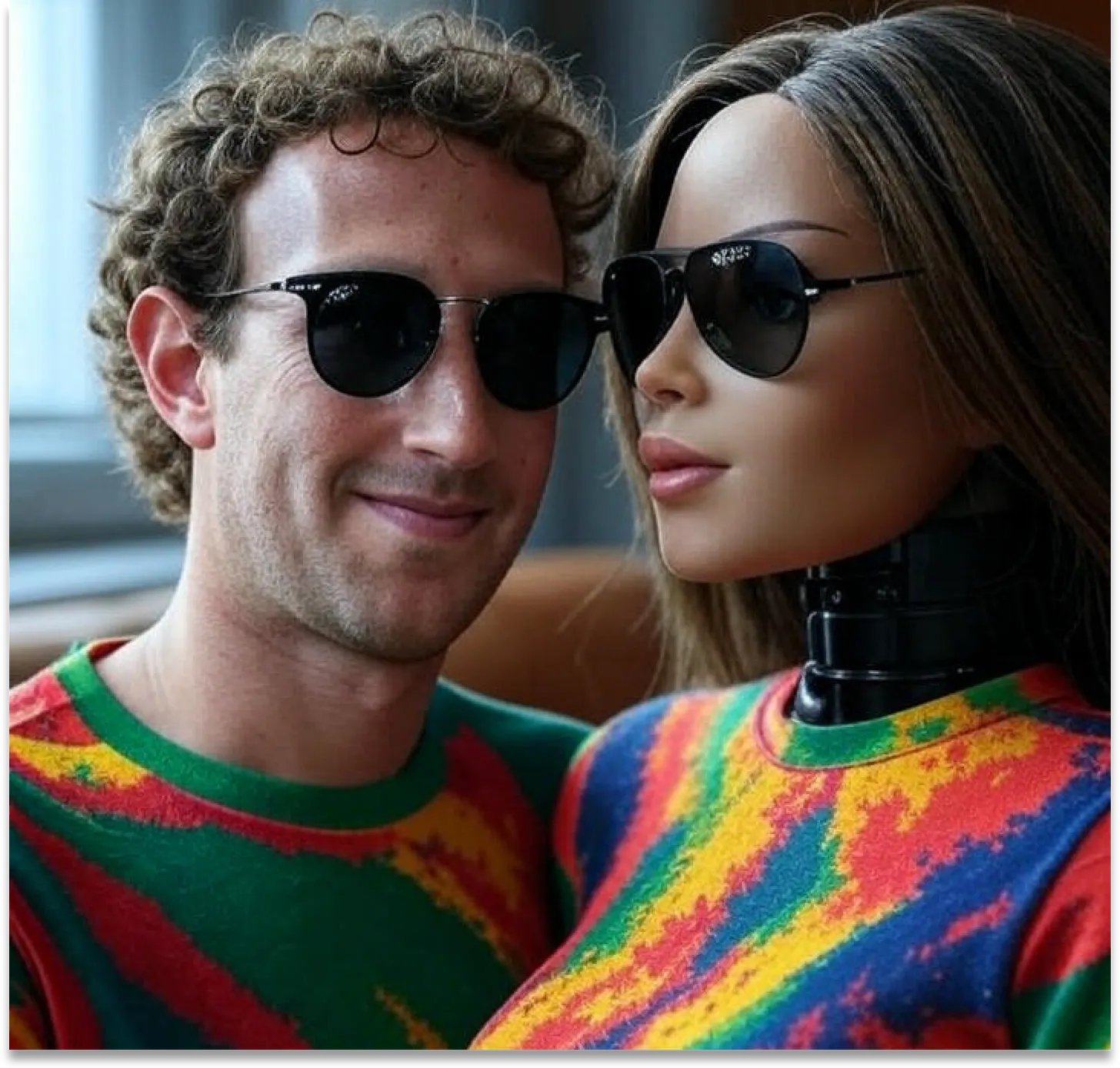
👀 Wall Street Journal op-ed this week, Mark Zuckerberg challenged the prevailing AI apocalypse narrative, arguing that the real danger is not superintelligence itself but concentrating it in a few hands.
“If superintelligence is widely distributed, then I believe we will see more jobs in the future, not fewer,” Zuckerberg says. “It will be significantly easier to start businesses without raising large amounts of capital. I expect the economy will become more entrepreneurial with a greater number of people working at small businesses rather than larger companies.”
👀 Coinbase CEO Brian Armstrong rejected the “if you’re in crypto, pivot to AI” mantra as zero-sum scarcity thinking. To make his point, he introduced “Agentic Finance (AiFi),” arguing that autonomous AI agents will need programmable crypto rails — already live on Base with USDC and x402 — because they cannot use traditional bank accounts at machine speed.
👀 Microsoft CEO Satya Nadella warned that companies relying on a single proprietary AI provider may not survive, arguing they must retain their prompts, metadata, context, and model flexibility or risk outsourcing their thinking and enabling vendors to become competitors.
👀 Ethereum co-founder Vitalik Buterin proposed a new high-level programming language designed to compile cleanly into Lean (or HOL) so humans can easily read the definitions and theorems in AI-generated proof blobs, treating formal verification of AI outputs as a key infrastructure problem.
👀 Jack Dorsey’s push for decentralized, open-source communication tools continues. His company Block launched Buzz, an open-source workplace chat app that combines Slack-style messaging, native AI agents, and GitHub project management in a single self-hostable workspace.
At the same time, India’s government appears to have ordered GitHub to remove repositories for Dorsey’s offline messaging app Bitchat, citing its decentralized design that allows protesters to communicate during internet shutdowns — and some reports note that Buzz incorporates Bitchat technology.
👀 Telegram CEO Pavel Durov promised the “largest rollout of a non-custodial crypto wallet in human history,” bringing self-custody tools directly into one of the world’s largest messaging platforms.
👀 Reid Hoffman and Mark Pincus are in talks to raise $100 million at a $1 billion valuation for Prentis, a new AI research lab focused on computer-use models that can automate routine office workflows. The startup has already signed contracts worth up to $50 million and claims its smaller Hive-32B model outperforms frontier systems on key computer-use benchmarks at roughly 10x lower cost.
👀 Treasury Secretary Scott Bessent said the U.S. will scrutinize Chinese open-source AI models for stolen American intellectual property and could sanction their developers, signaling a new front in Washington’s effort to protect U.S. AI companies.
👀 Billionaires led by Google cofounder Sergey Brin have reserved nearly $87 million in California TV ads to block a proposed one-time tax on residents worth at least $1 billion, including by backing rival ballot measures that could invalidate it.
👀 A leather jacket worn and signed by Nvidia CEO Jensen Huang sold for $960,000, 16 times Sotheby’s high estimate, cementing his trademark look as the latest tech-founder uniform to become high-priced memorabilia.
👀 Harvard mathematician Levent Alpöge says Anthropic’s Claude Fable 5 helped produce a 216-character counterexample disproving the 87-year-old Jacobian conjecture, potentially the hardest math problem yet solved with AI.
👀 The EU added Justin Sun’s HTX to its Russia sanctions list, barring transactions from August 23. Mr. Sun is the Chinese-born crypto billionaire behind the Tron blockchain who owns the HTX exchange (formerly Huobi). Regulators say HTX helped Russian users and entities evade sanctions.
👀 OpenAI CEO Sam Altman said humanity has entered the technological singularity — the long-theorized point when AI surpasses human intelligence and advances unpredictably — calling the moment “incredible” while criticizing rival labs’ darker warnings.
Following the Money🤑
VC Deals ($5M+)💰
AI Agents & Platforms
💰 Neo (Tel Aviv / Boston) raises $75 million Series A | Enterprise platform to discover, monitor, and control AI agents | Investors: Andreessen Horowitz & Bessemer (co-leads), Craft Ventures, Merlin Ventures | Total VC funding: $100 million | (July 2026)
💰 Paper (San Francisco) raises $34 million Series A | HTML/CSS canvas that connects visual designs with production code and coding agents | Investors: Accel & ICONIQ (co-leads), Designer Fund |(July 2026)
💰 Reo.Dev (San Francisco) raises $11.3 million Series A | Identifies technical software buyers from developer activity and AI agent interactions | Investors: Elevation Capital (lead), Uncorrelated Ventures + prior | Total VC funding: $15.3 million | (July 2026)
💰 Uniti (New York) raises $12 million Series A | AI agents that automate leasing, maintenance, communications, and payments for real estate operators | Investors: Pathlight (lead), MetaProp + prior | (July 2026)
💰 Kausable (Heidelberg, Germany) raises a $13.6 million (€12 million) seed | AI models that learn from minimal data and adapt to unfamiliar problems without repeated retraining | Investors: UVC Partners & Entourage (co-leads), HTGF, Mätch VC | Total VC funding: $13.6 million | (July 2026)
💰 Telli (Berlin) raises a $15 million seed | AI agents that automate sales and customer service conversations across phone, chat, email, and messaging | Investors: Redalpine (lead), Mutschler, Cherry Ventures, Y Combinator | Total VC funding: $18.5 million | (July 2026)
💰 Freight Hero (Durham, NC) raises a $5 million round | AI agents and human operators that run freight brokers’ back-office load operations from rate confirmation through proof of delivery | Investors: Field Ventures (lead), Flybridge Capital, Tip Top VC, Front Porch Venture Partners | Total VC funding: $6+ million | (July 2026)
💰 Pilot Protocol (San Francisco) raises a $4.5 million seed | Connects AI agents so they can discover one another, exchange messages, install tools, and make payments without human setup | Investors: Version One Ventures (lead), Precursor Ventures, Night Capital, Todd & Rahul Capital | Total VC funding: $4.5 million | (July 2026)
Infrastructure/Compute
💰 SkyPilot (Berkeley, CA) raises a $20 million seed | AI compute orchestration across multiple cloud and GPU providers | Investors: Lux Capital (lead), Coatue, Amplify Partners | Total VC funding: $20 million | (July 2026)
💰 Infinity (San Francisco, CA) raises $15 million seed at a $100 million post-money valuation | Inference software that helps AI chips run models without Nvidia’s CUDA stack | Investors: Touring Capital, Principal VC | Total VC funding: $15 million | (July 2026)
💰 Multiverse Computing (San Sebastián, Spain) raises $570 million Series C at a $1.7 billion pre-money valuation | Compresses large AI models so they can run on phones, factory equipment, vehicles, and telecom infrastructure without cloud connections | Investors: Forgepoint Capital International, BNPP SIVF & Bullhound Capital (co-leads), Santander Alternative Investments, Tikehau Capital, HP Inc, Orange Ventures, Scania Invest, NAventures, Qatar Development Bank, Zouk Capital, SETT, EIC Fund, Basque government’s Hazten Scale-Up Fund, Kutxa Fundazioa + others | Total VC funding: ~$800 million | (July 2026)
Robotics / Physical AI
💰 Genesis AI (Paris / San Carlos, CA) is in talks to raise ~$500 million at a $3 billion pre-money valuation | General-purpose robots and robotics foundation models | (July 2026)
💰 Gritt (San Francisco, CA) raises a $26 million Series A | Robotic arms + AI software that automate labor-intensive construction work | Investors: Obvious Ventures (lead), Union Square Ventures, Active Impact Investments + prior | Total VC funding: $32.4 million | (July 2026)
💰 Enigma (Israel / San Francisco) raises a $71 million seed | Robotics foundation models and interfaces that make robots easier for humans to control | Investors: Index Ventures & Ribbit Capital (co-leads), Conviction Partners | Total VC funding: $71 million | (July 2026)
💰 Dopl Technologies (Bothell, WA) raises a $6.3 million seed | Hardware-agnostic robotic ultrasound systems that let sonographers remotely perform diagnostic exams | Investors: SpringTide Ventures (lead), WRF Capital, Tacoma Venture Fund, HeartX, Transform Health Ventures, Precursor Ventures | Total VC funding: $8+ million | (July 2026)
💰 Ropedia (Singapore) raises $22 million | Collects video, spatial, and motion data from wearables for robotics training | Total VC funding: $30 million | (July 2026)
Defense Tech
💰 Andrenam (Hawthorne, CA) raises an $18 million Series A | Buoy-based underwater acoustic sensors for maritime surveillance | Investors: Upfront Ventures (lead), Valor Equity Partners, Also Capital, First Round Capital | Total VC funding: $30 million | (July 2026)
💰 Twenty (Arlington, VA) raises $30 million at a $1.2 billion post-money valuation | AI systems supporting offensive cyber operations for U.S. military and intelligence | Investors: Khosla Ventures (lead) | Total VC funding: $168 million | (July 2026)
Space / Aerospace
💰 DeltaVision (Munich) raises $11.6 million | Valves, pressure regulators, and electric pumps for spacecraft | Investors: KT Ventures & Valemount Capital (co-leads), Futury Capital | (July 2026)
Biotech / Synthetic Biology
💰 Colossal Biosciences (Dallas) is reportedly in talks to raise at a $20–30 billion valuation | Genetic engineering to revive extinct species and support conservation | (July 2026)
Semiconductors / Sensors / Deep Tech Hardware
💰 Elio (San Mateo, CA) raises $21 million | Adaptive optical sensors that help AI systems identify objects by physical characteristics | Investors: Innovation Endeavors & Xora (co-leads) + prior | (July 2026)
Medical & Health Devices
💰 RapidPulse (Miami) raises $48 million Series B | Catheter-based aspiration technology for ischemic stroke treatment | Investors: Medtronic, TechWald Next, S3 Ventures (co-leads) + prior | (July 2026)
💰 TidalSense (Cambridge, UK) raises $19 million | Handheld breathing test for COPD diagnosis without spirometry | Investors: Cross-Border Impact Ventures + prior | Total VC funding: $40 million | (July 2026)
💰 Hilo Health (Neuchâtel, Switzerland) raises $19 million Series B extension | Continuous blood-pressure tracking via wrist sensor and app | Investors: Dell Family Office | Total VC funding: $119+ million | (July 2026)
💰 Flourish Health (Richmond, VA) raises a $26 million Series A | In-home, psychiatrist-led mental health care for children and young adults with serious, complex needs | Investors: B Capital, F-Prime & Cherryrock Capital (co-leads) | Total VC funding: $46 million | (July 2026)
Energy & Materials
💰 Sila (Alameda, CA) raises $300 million | Silicon-carbon anode materials that replace graphite in lithium-ion batteries | Investors: Atreides Management & Sutter Hill Ventures (co-leads), 8VC, Bessemer, Matrix, T. Rowe Price | (July 2026)
💰 CuspAI (Cambridge, UK) raises $450 million Series B at a $2.6 billion post-money valuation | AI for discovering materials that reduce research times and rare-metal reliance | Investors: Kleiner Perkins (lead), Bezos Expeditions, Lux Capital, AMD Ventures + others | (July 2026)
💰 Bluecore Energy (Long Beach, CA) raises $10 million pre-seed | Barge-mounted small nuclear reactors for ports, coastal infrastructure, and data centers | Investors: Nauson & Co. (lead), Harlem Capital, Precursor Ventures, Chris Larsen + others | Total VC funding: $10 million | (July 2026)
💰 Circular Materials (Padua, Italy) secures $13.5 million SAFE | Recovers critical raw materials from industrial wastewater | Investors: CDP Venture Capital, EIC Fund, EIT RawMaterials + others | (July 2026)
💰 Antares (Torrance, CA) raises a $470 million Series C | Compact nuclear microreactors providing years of uninterrupted power for military installations and space applications | Investors: Paradigm & Caffeinated Capital (co-leads), Point72 Ventures, Industrious Ventures, Shine Capital | Total VC funding: $600+ million | (July 2026)
💰 Nuclear Turbines (Manchester, UK) raises £15 million | Compact modular nuclear reactors designed to generate lower-cost electricity for industrial sites, data centers, and manufacturing facilities | Investors: IQ Capital (lead), Rhapsody Venture Partners, Zero Carbon Capital, Empirical Ventures | Total VC funding: $15 million | (July 2026)
Cybersecurity
💰 Way Security (Tel Aviv) raises a $20 million seed | Automates integration and policy enforcement for enterprise identity systems across legacy apps, internal tools, and third-party services | Investors: Insight Partners & Glilot Capital (co-leads) | Total VC funding: $20 million | (July 2026)
💰 Beelzebub (Milan) raises a $3.4 million seed | Combines adversary emulation, deception traps, and threat intelligence to detect and contain cyber intrusions | Investors: United Ventures (lead) | Total VC funding: ~$3.8 million | (July 2026)
Fintech
💰 Augustus (New York) raises $180 million at a $1 billion valuation | Federally chartered clearing bank for stablecoin-era payments (“Global Dollar Bank”) | Investors: Tiger Global (lead), Hummingbird, QED | (July 2026)
💰 World Foundation (San Francisco) raises $52.5 million via locked WLD token sale | Biometric “proof of human” identity network (World ID) | Investors: Pantera Capital (lead), Bain Capital Crypto + others | All tokens carry a 12-month lockup. Proceeds will expand World ID, the biometric proof-of-human network, as AI agents proliferate online. (July 2026)
💰 Natural (San Francisco) raises $30 million Series A | Payments infrastructure for AI agents | Investors: Forerunner (lead) | Total VC funding: $40 million | (July 2026)
💰 Digital Asset / Canton Network raises additional $10 million at $2 billion valuation | Privacy-focused blockchain for tokenized assets and regulated markets | (July 2026)
💰 Fincart (Cairo) raises a $2.8 million seed | Helps e-commerce merchants manage shipping, cash-on-delivery settlement, short-term financing, and customer retention | Investors: Launch Africa & Antler MENAP (co-leads), Yango Ventures, Five35 Ventures, Bluestream Capital, Hi2 Global, Kalahari Venture Labs, Orbit Ventures | Total VC funding: $2.8 million | (July 2026)
Sustainability / Cleantech
💰 Moa Technology (Oxford, UK) raises $29.6 million Series C | Synthetic and biological herbicides for resistant weeds | Investors: Oxford Science Enterprises & Supernova Invest (co-leads) + prior | (July 2026)
M&A Deals ($100M+)🤝
🤝 Cognition (maker of Devin) acquires The Interaction Company of California (Poke assistant) | Personal AI agent that lives in messaging apps (iMessage, SMS, Telegram, WhatsApp) with strong personality and proactive interaction model | Deal valued in the low nine figures | Announced July 23–24, 2026; Poke team joining Cognition to enhance Devin’s interaction capabilities | (July 2026)
🤝 Midjourney acquires Co-Star | Social astrology app with ~4.3 million monthly users that uses AI + human writers for horoscopes and compatibility | Terms not disclosed | ~24 employees joining Midjourney; deal closed earlier in spring 2026, announced July 2026 as Midjourney builds its first standalone consumer apps | (July 2026)
🤝 Einride acquires Flipturn | EV-charging operations software for heavy-duty and fleet charging networks | $38.4 million all-stock deal | Expected to close July 2026; adds >250 MW of managed charging capacity and creates one of North America’s largest heavy-duty EV charging networks | (July 2026)
IPOs & Filings 📈
📈 Moonshot AI (Beijing, China) seeks shareholder approval for Hong Kong IPO within six months | Open-weight large language models (Kimi series, including Kimi K3) | ARR ~$300 million; private funding round could value company at $30B–$50B pre-IPO | Targeting listing within ~6 months; Goldman Sachs and CICC advising; working to unwind VIE structure | (July 2026)
📈 MetaX (Shanghai, China) confidentially files for Hong Kong IPO | High-performance GPUs and computing platforms for AI training, inference, and graphics | Already listed on Shanghai STAR Market (Dec 2025, ~$600M raise; current market value ~$40–48B after ~700% debut surge) | Targeting year-end 2026 Hong Kong listing; banker Huatai International; H-share offering up to 5% of enlarged capital | (July 2026)
📈 CXMT (ChangXin Memory Technologies, Hefei, China) completes Shanghai STAR Market IPO | DRAM memory chips for smartphones, computers, servers, and AI systems | Raised $8.6 billion (Asia’s largest IPO of 2026); surged 466% on debut | Post-debut market capitalization ~$485–490 billion, making it the most valuable China-listed company | 10-year-old firm; world’s fourth-largest DRAM maker with ~7.7% global share in 2025; proceeds mainly for capacity expansion | (July 2026)
New VC Funds 💸
💸 Dimension Capital (New York, NY) raises $800 million for Fund III (60% larger than its $500 million Fund II) | Early-stage investments at the intersection of science and compute (biotech + AI) | Four-year-old firm co-founded by Zavain Dar, Adam Goulburn, and Nan Li; manages $1.65 billion AUM across 35 companies; early bets include Chai Discovery and New Limit | (July 2026)
💸 SuperCharger Ventures (Malta) launches €10 million Fund I | Pre-seed and seed EdTech and future-of-work startups worldwide | Initial checks up to €250,000 with follow-ons of €500,000–€1.5 million; backs top graduates from its global accelerator cohorts | (July 2026)
