Getting right to the bottom line: I believe the biggest geopolitical risk for the world—outside the nuclear race between the US, China, and Russia—is who gets their digital currency into the hands of the unbanked and citizens in countries with failing currencies first. Shockingly, this is one of the most under-discussed but potentially transformative geopolitical risks in the modern age.
Back in August of 2023, in one of our first editions of The Rap, we were waving the Red Flag (pun intended) that President Xi green-lit the high-profile e-CNY and crypto wallet pilot rollout on the Apple and Google app stores 😳 for 260 million Chinese citizens during the 2022 Beijing Winter Olympics. This marked a major public expansion following initial pilots that began in 2020.
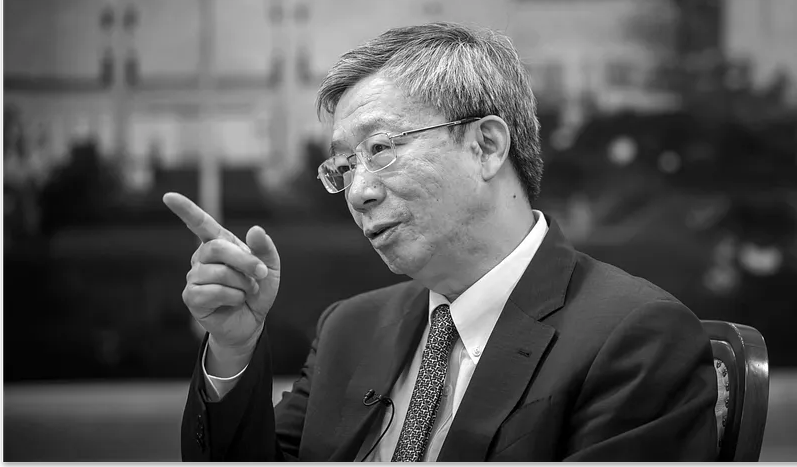
‘It’s about economic velocity, stupid!’ says former Governor of the People’s Bank of China, Yi Gang, regarding the 2023 e-CNY pilot results.
Initial test results: e-CNY transactions hit 1.8 trillion yuan ($250 billion) by the end of June 2023. ‘The balance of e-CNY is tiny, but it proved that the velocity of digital currencies is significantly higher and more efficient than any current form of currency,’ said then Governor of the People’s Bank of China (PBOC) Yi Gang, who earned his Ph.D. from the University of Illinois. Of course it is.
Today, the e-CNY is in an advanced pilot and expansion phase and is the world’s largest and most advanced central bank digital currency (CBDC) experiment. To date, the e-CNY has processed over 3.48 billion cumulative transactions worth approximately 16.7 trillion yuan (around $2.37 trillion USD)—an explosive increase of more than 800% since 2023.
Starting January 1, 2026, the PBOC transitioned the e-CNY from a ‘digital cash’ model to a ‘digital deposit money’ one, which allows commercial banks to pay interest on e-CNY wallet balances—making it the world’s first interest-bearing CBDC. The goal is to boost user adoption by offering returns comparable to those of private stablecoins and to deepen integration into domestic and international banking systems.
The e-CNY’s biggest challenge is that many rightly view it asa tool for CCP financial and personal data surveillance and control, including contributing to the totalitarian regime’s ‘social scoring’ system and cross-border de-dollarization efforts. Currently, the USD accounts for ~57% of global foreign exchange reserves, while the Chinese yuan (renminbi) accounts for a measly ~1.93%. In essence, the eCNY is positioned as the CCP’s challenge to the global monetary order.
Loading...
The two heads of the Chinese dragon
Our 2023 post noted China’s two crypto heads—a strict mainland crypto ban and an aggressive push for e-CNY, contrasted with a more open, crypto-friendly ‘window’ to global markets in Hong Kong. This “two heads of the dragon” dynamic allowed the CCP to experiment and benefit from the decentralized finance boom, while maintaining tight surveillance and monetary sovereignty at home.
As of mid-March 2026, this core tension remains very much in place—and has arguably sharpened—with significant evolution in both directions. The total mainland ban on crypto (trading, mining, ICOs, etc.) remains in place. In February 2026, the PBOC issued a joint notice explicitly banning unauthorized offshore issuance of yuan-pegged stablecoins, tightening oversight on tokenized real-world assets (RWAs), and reiterating that virtual currencies have no legal status—a clear escalation prohibiting private stablecoins (like USDT) and any crypto innovation that could challenge the e-CNY monopoly.
Meet the two Chinese dragon crypto heads—Beijing and HK.
Yet, Hong Kong has doubled down as a regulated digital asset hub, with Beijing’s apparent tolerance (or strategic endorsement) despite mainland restrictions. Key updates:
The irony persists: Hong Kong enables banks and institutions to engage deeply with crypto, stablecoins, ETFs, and blockchain, attracting global capital and innovation, while the mainland enforces centralized control and cracks down even harder on anything resembling private crypto.
The e-CNY isn’t just digital cash—it’s programmable money designed to give the CCP real-time traceability of transactions, the power to set spending rules (where, when, on what), and enhanced tools to monitor and punish financial behavior they don’t like—Surprise, surprise!
Beijing is also actively engaging with other countries and international organizations to begin shaping global standards for the future of money, thereby undercutting our economic leverage and global financial power. Quite ironically, the CCP’s sales pitch is that the e-CNY can contribute to financial inclusion and global financial stability.
In an upcoming Rap, I’ll givereaders a status report on the digital USD (which there isn’t one), and why our lagging on the digital dollar is setting the stage for a global Orwellian nightmare.
Apple cofounder Steve Jobs ran on the 80/20 rule (80% signal, 20% noise). Rumor has it, Elon Musk hits 100% signal—zero distractions.
Ruthlessly focusing on execution wins every time.
Speaking of paying attention to seminal signals—that’s the business Cryptonite is in.
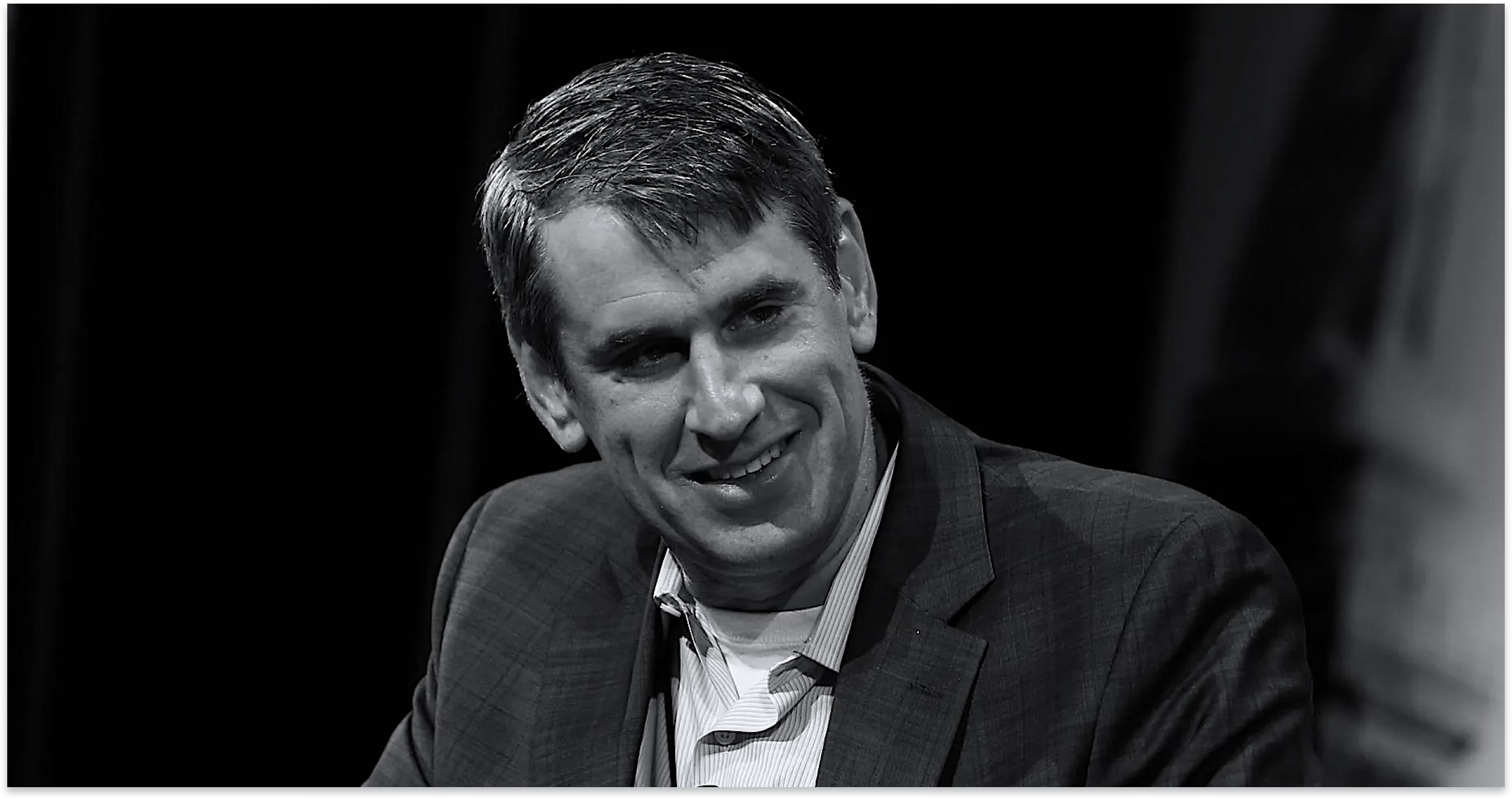
Bill Gurley just nailed it below—Real AI wave, get-rich frenzy, valuations reset ahead. Pure signal.
💥 Subscribe now at 33% off—just $6/month (medium designer coffee ☕️)—and power Cryptonite! 🚀
🔒 Paid members unlock:
Early access + connections to next-gen Web3 companies, including an early peek at our Cryptonite 300 top companies, VC 100, and the hot crypto projects.
Innovation trends + growth analytics on startups disrupting Big Tech
Special events, private parties + exclusive invites 🥳
💥 Building a Web3 startup? Hunting VCs? Sharpening your pitch thesis?
Your sub pays BIG dividends—feeds our young talent, and keeps you relevant+ competitive!
The Journey is the reward! — Let’s make it happen together!
— Cordially, the Cryptonite team. Huff Puff 😅.
Cryptonite: Your insider guide to global Silicon Valley. Be There or Be Square 😎🤙🏼
💥Help the mouths that feed you — We would appreciate it 🙏🏼
VC legend Bill Gurley predicts a major AI reset
In an interview on CNBC’s Money Movers, Hall of Fame VC and former GP at Benchmark, Bill Gurley, acknowledged that AI is a genuine ‘industrial‑innovation wave’ with transformative potential, but predicts that AI company values will be ‘reset.’ (We think saying ‘reset’ is polite way to say ‘blow the f*ck up.’) It’s a theme we have been preaching since last Summer, and emphatically emphasized in our last post.
“When people get rich quickly, a whole bunch of people come in and want to get rich too, and that’s why we end up with bubbles,” says the Gurley Man. He referenced economist Carlotta Perez’s book Technological Revolutions and Financial Capital:The Dynamics of Bubbles and Golden Ages, noting that ‘industrial bubbles only exist when the actual wave is real,’ unlike purely destructive financial bubbles (e.g., the 2008 housing crisis).
When Bill Gurley speaks, we listen. Check out his podcast—the BG2Pod.
‘If there is a real technology wave—that’s fundamentally changing the world— then you’re going to have bubble-like behavior. They come together as a pair precisely because anytime there’s very quick wealth creation, you’re going to get a lot of people that want to come try and participate in it, and that creates massive speculation. The ‘get rich quick’ mentality always inflates valuations.'
The early investments in AI have already had 100x plus returns a while ago—and that’s not to say there won’t be an incremental AI investment that makes money—but your odds right now of that being the case are really, really low.’
—Bill Gurley
Billions in AI infrastructure CapEx
Drawing from BG’s experience as an early Uber investor, where Benchmark unceremoniously helped push out founder and CEO Travis Kalanick in 2017, BG recalled Uber’s $2 billion annual burn rate as ‘high anxiety.’ He contrasted this with today’s AI startups like Anthropic and OpenAI, which are burning through far larger sums: ‘God bless them… It’s a scary way to run a company,’ he says.
Our readers know that we think these cash burns are a key reason OpenAI, in particular, is horribly over‑valued. BG has previously predicted that competitive ‘race conditions’ could push firms toward unsustainable builds, with OpenAI potentially needing $150 billion in CapEx by 2030 to achieve ‘escape velocity.’
He has also pointed to record AI infrastructure spending by the Magnificent Seven tech giants—such as Amazon, Meta, Google, and Microsoft—projected at about $700 billion in 2026, fueled by soaring memory costs and data center construction. BG suggests this frenzy has led to over-enthusiasm, contributing to the bubble dynamics. He has, however, differentiated AI investments from past failures, such as Meta’s billions invested in Reality Labs, which have yielded no tangible returns. He notes generative AI’s real enterprise utility but stresses the need for monitoring to detect slowdowns masked by leverage.
The other includes that OpenAI’s unquenchable need for cash has resulted in an unprecedented roster of ultra-powerful corporate backers with enormous stakes (Microsoft ~27%😳, SoftBank ~13%, Amazon ~6%, and NVIDIA ~3.6%) that come with very explicit, high-pressure expectations that may or may not be in the best interest of the company.
In recent discussions, BG has highlighted a wave of speculative “gray zone” deals that risk creating hidden leverage and muddying genuine demand signals in AI. He cites examples like:
These transactions, he argues, allow participants to inflate metrics while shifting risks. ‘If we don’t do it, everyone else is doing it,’ BG notes, ‘but it muddies the waters.’
Sam Altman and SoftBank’s Masayoshi Son struck a pact for the investors’ ~13% stake in OpenAI.
Sleeping with your strategic partners
Microsoft receives a whopping ~20% of OpenAI’s total revenue, including from OpenAI’s other cloud partnerships, and has an exclusive license to OpenAI’s IP across all models and products—extended through at least 2032. Azure serves as the exclusive cloud provider for OpenAI’s stateless APIs.
On the upside, BG suggests that during the upcoming AI market correction, investors can capitalize on undervalued assets. He advises having target prices ready for beaten‑down SaaS stocks—and ‘start gobbling them up once the reset occurs.’ He highlighted how AI has disrupted the software sector, with stocks such as Salesforce and ServiceNow down about 25% year-to-date in 2026, and the iShares Expanded Tech-Software Sector ETF (IGV) falling around 20%.
BG’s career advice from his book Runnin’ Down a Dream, released in 2025: ‘Be the most AI‑enabled version of yourself you can possibly be. I don’t care what field you’re in; you should be playing with AI. The thing that will differentiate you more than anything else is being the most hyper‑curious person trying to do this stuff. You have no excuse not to be the most knowledgeable version of yourself, because the information is all out there, one AI query away.’
💰 Cursor in talks for ~$50B valuation—AI‑coding assistant with “vibe coding”‑style interface and $2B+ annualized revenue, backed by Google, Nvidia, Coatue, and Andreessen; pricing as a quasi‑public‑tier dev‑tooling platform…
💰 Nscale $2B AI‑data‑center equity/debt—Lightspeed/Bessemer‑backed 10GW AI‑campus plan across Europe; Sandberg/Clegg join board as hard infrastructure for trillion‑parameter models scales…
💰 Advanced Machine Intelligence $1.03B—Yann LeCun‑co‑founded Paris‑based AI lab building “next‑gen foundation‑model stack” for robotics and enterprise, with a heavyweight PE‑heavy syndicate signaling long‑term AI‑research‑plus‑applied play…
💰 Nexthop AI $500M Series B—Lightspeed‑led AI‑networking stack for AI/ML clusters; Andreessen joins as Santa Clara‑based switches + open‑OS stack target hyper‑scale data‑center throughput…
💰 Mind Robotics $500M Series A—Accel/Andreessen‑led Rivian‑spin‑out AI‑enabled industrial robotics platform for manufacturing automation; plants, logistics, and “dark factory” use cases in the crosshairs…
💰 Rhoda AI $450M Series A—Premji‑led Palo Alto robotics startup training robots on hundreds of millions of videos; embodied‑AI models for complex, dynamic environments, with clear AV/warehouse overlap…
💰 Axiom Math AI $200M Series A—Menlo‑led code‑verification‑focused AI systems at a $1.6B valuation; safety‑critical tooling for AI‑native code bases, including AV and robotics stacks…
💰 Rebar $14M Series A—Benchmark‑led AI operating system for commercial HVAC suppliers; slashes quote‑generation time by up to 70% vs traditional methods, embedding AI into a legacy‑heavy vertical…
💥 Did we miss your company’s new funding, IPO filing, or M&A? Post it below—and tell us what we missed.
💸 NVIDIA + Groq inference stack — New “hybrid rack” pairing NVIDIA chips with Groq‑style ultra‑fast inference targets 35× tokens‑per‑watt gains, marketing as the “AI‑factory” backbone for agentic workloads at scale.
🧠 Nemotron Coalition models — NVIDIA launches Nemotron Coalition with Cursor, Thinking Machines, and Mistral to train an open‑weight, agentic‑focused model on DGX Cloud, tuned for multi‑step planning and tool‑use.
🔬 ToolTree agents— “ToolTree” MCTS‑style planner for LLM agents delivers ~10% gains on open‑ and closed‑set tool‑planning benchmarks while staying compute‑light, signaling a shift to “search‑first” tool‑routing.
🔌 ReBalance reasoning— ReBalance framework modulates “thinking depth” via confidence‑based steering, improving accuracy and efficiency on math, QA, and coding tasks without added parameters.
🌐 Web‑agent planning paper — New LLM‑web‑agent planning framework ties classic planning (BFS, etc.) to modern agents, with new trajectory‑quality metrics and “Full‑Plan‑in‑Advance” validation on WebArena‑style tasks.
🧠 Manus “My Computer” agent — Desktop app lets AI agents directly interact with local files, tools, and apps, positioning as an early OS‑level agent client prototype for local‑first AI‑workflows.
🦄 MiroFish swarm‑engine — “Universal swarm‑intelligence” prediction engine for LLMs scores +3k stars in a day, framed as a lightweight swarm‑layer atop existing models.
📁 OpenViking agent memory — Context/memory database for AI agents using a file‑system‑style hierarchy gains ~2k stars rapidly, sold as a “filesystem for agentic state.”
💻 GitNexus IDE agents— Zero‑server, browser‑based code‑intelligence engine with built‑in Graph‑RAG agents hits +1.8k stars, targeting IDE‑native, agentic dev‑assist.
🤖 Deepagents LangChain harness— Agent‑harness with LangChain/LangGraph, planning tools, and sub‑agent spawning now trending as a “Meta‑agent‑controller” toolkit for complex multi‑agent stacks.
🔌Claude‑mem context‑wrapper — Claude‑focused plugin that auto‑captures sessions, compresses context, and re‑injects it, designed to keep Claude‑agent workflows close to token‑budgets while staying stateful.
💥 New paper, model, or tool you think we should track? Drop your headline below—and give us the inside scoop.
Continue reading this post for free, courtesy of The Cryptonite Weekly Rap.