
Cryptonite editorial worldview on the Islam faith and ideology
Why America must distinguish peaceful Muslims from radical Islamism — and why thoughtful immigration filtering is necessary and just.

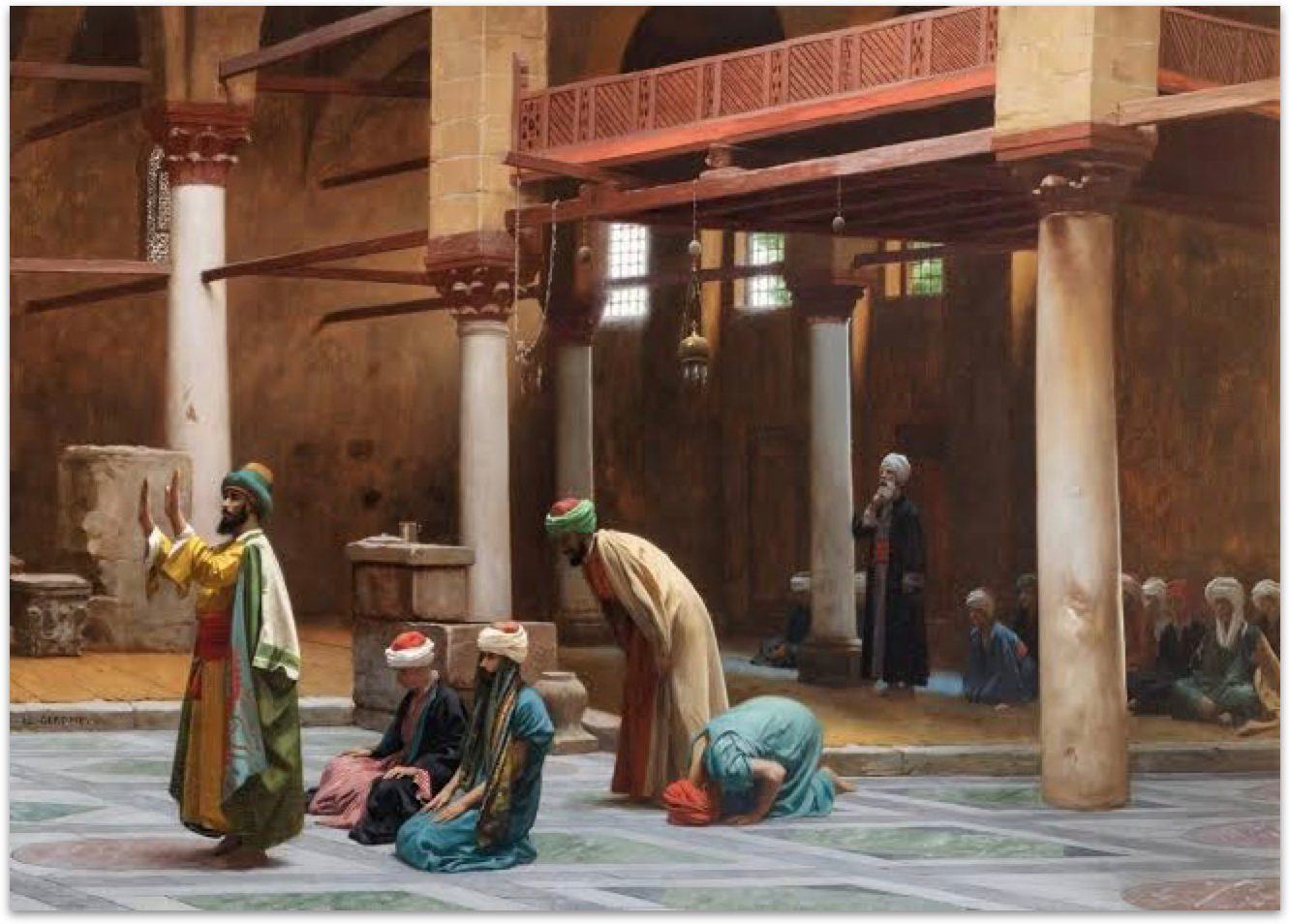
Cryptonite Editorial Statement — Updated July 4th, 2026
Americans mostly hear about Islam through a narrow lens — terrorist attacks, hostage crises, oppressive regimes. These images are real and demand attention, but they do not tell the full story of a faith practiced by nearly two billion people.
At Cryptonite we seek truth without euphemism and without collective blame. We are not anti-Muslim. We reject framing that paints an entire religion or its adherents with extremism. We are anti-radicalism, anti-supremacism, and anti-any ideology that seeks to overthrow constitutional orders in the name of religion. We are pro-clarity, pro-innovation, and pro-the conditions that have allowed millions of peaceful Muslims to live, prosper, and contribute in America — especially in Silicon Valley’s innovation economy.
This editorial sets out the distinctions that matter; the specific threat posed by Iran’s radical regime; the cautionary lessons from Western Europe’s experience with poorly filtered immigration; and the case for principled American policy that protects security and values.
The Peaceful Majority and Muslim Success in America
The overwhelming majority of Muslims worldwide are peaceful men and women who treat their religion as personal devotion, ethics, family, and community. They seek to worship according to their conscience, provide for their families, and live in harmony with their neighbors. They reject violence and political ideologies demanding global supremacy through coercion or conquest.
In the U.S., Muslim Americans number approximately 3.5 to 4 million. They are diverse — Black, South Asian, Arab, African, Southeast Asian, and converts — and on key metrics show strong integration and contribution.
Educational attainment among Muslim Americans is comparable to national averages; foreign-born Muslims are particularly likely to hold college or advanced degrees. Roughly 8% are self-employed or own businesses, each hiring an average of eight workers and collectively supporting well over a million jobs. Muslim-owned small and medium enterprises generate tens of billions in annual revenue across infrastructure, healthcare, fintech, and consumer sectors.
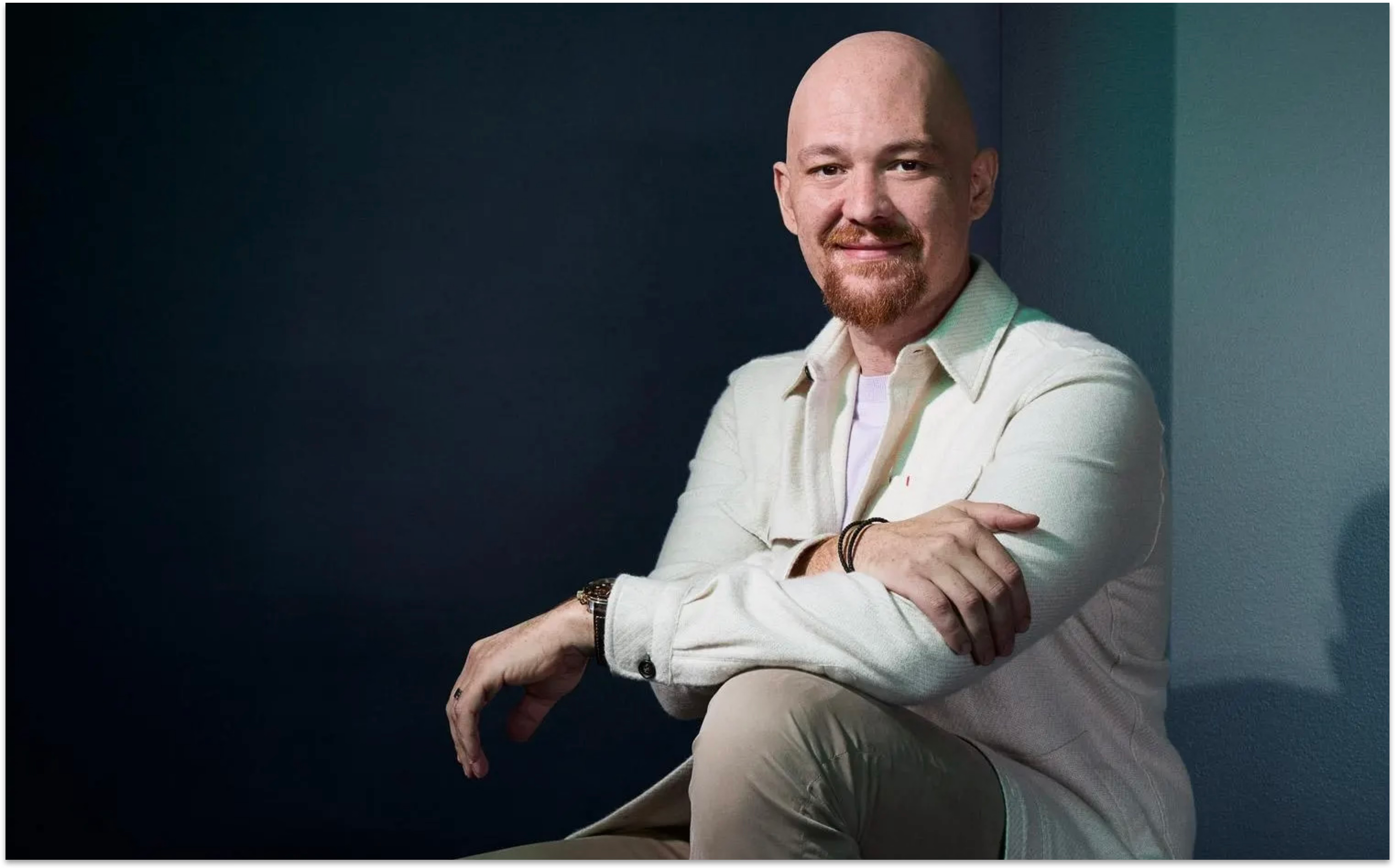
Amjad Masad, a practicing Muslim, is founder and CEO of Silicon Valley-based Replit, a collaborative coding platform evaluated at $1 billion. A former Y Combinator partner, he is a prominent founder and mentor in the tech community, known for openly integrating his Muslim faith and values into his work and leadership.
Nowhere is this success more visible than in Silicon Valley and the broader American tech ecosystem. Muslim professionals — engineers, researchers, founders, product leaders, executives — have come to the Bay Area and other innovation hubs through skilled immigration from Pakistan, India, Iran, Egypt, Lebanon, and elsewhere. They work at leading companies and startups in software, hardware, AI, biotechnology, and emerging fields.
Organizations such as OPEN Silicon Valley were founded to connect and mentor this community, fostering entrepreneurship and networks that strengthen the innovation economy. These individuals and families live in our communities, pay taxes, raise children in American schools, file patents, build companies, and contribute ideas and capital to the technological leadership that defines American strength. When their personal values align with constitutional principles — individual liberty, equality under law, free inquiry, separation of religious and political authority — they prosper and enrich the ecosystem.

Omar Waseem, a practicing Muslim in Silicon Valley, is a young entrepreneur and venture capitalist in his early 20s. He served as CMO of Fei Protocol, which reached a peak valuation of approximately $2 billion, and founded Alif, a VC fund focused on backing Muslim founders.
This is the America we celebrate — a nation that judges individuals on character and contribution rather than ancestry or creed. Peaceful Muslims who treat Islam as personal faith have every right to the same opportunities and protections as any other American. Many explicitly condemn extremism and express pride in both their faith and their American identity. We reject bigotry and collective guilt. Many Muslims, including brave dissidents inside Iran itself, are victims of the very radical ideology we must confront.
The Radical Strain — Islamism, Jihadism, and Khomeinism
Honesty requires distinguishing the personal faith of the majority from a distinct, dangerous political ideology within parts of the broader Islamic world. Often called Islamism or radical Islam, this ideology interprets Islamic texts, history, and classical jurisprudence to demand the supremacy of Islamic law and governance over competing systems. It divides the world between the House of Islam and the House of War and treats jihad, in many cases, as armed struggle to expand Islamic dominion or resist perceived enemies. It draws on certain interpretations of scripture and tradition, amplified by 20th-century revivalist thinkers and puritanical movements.
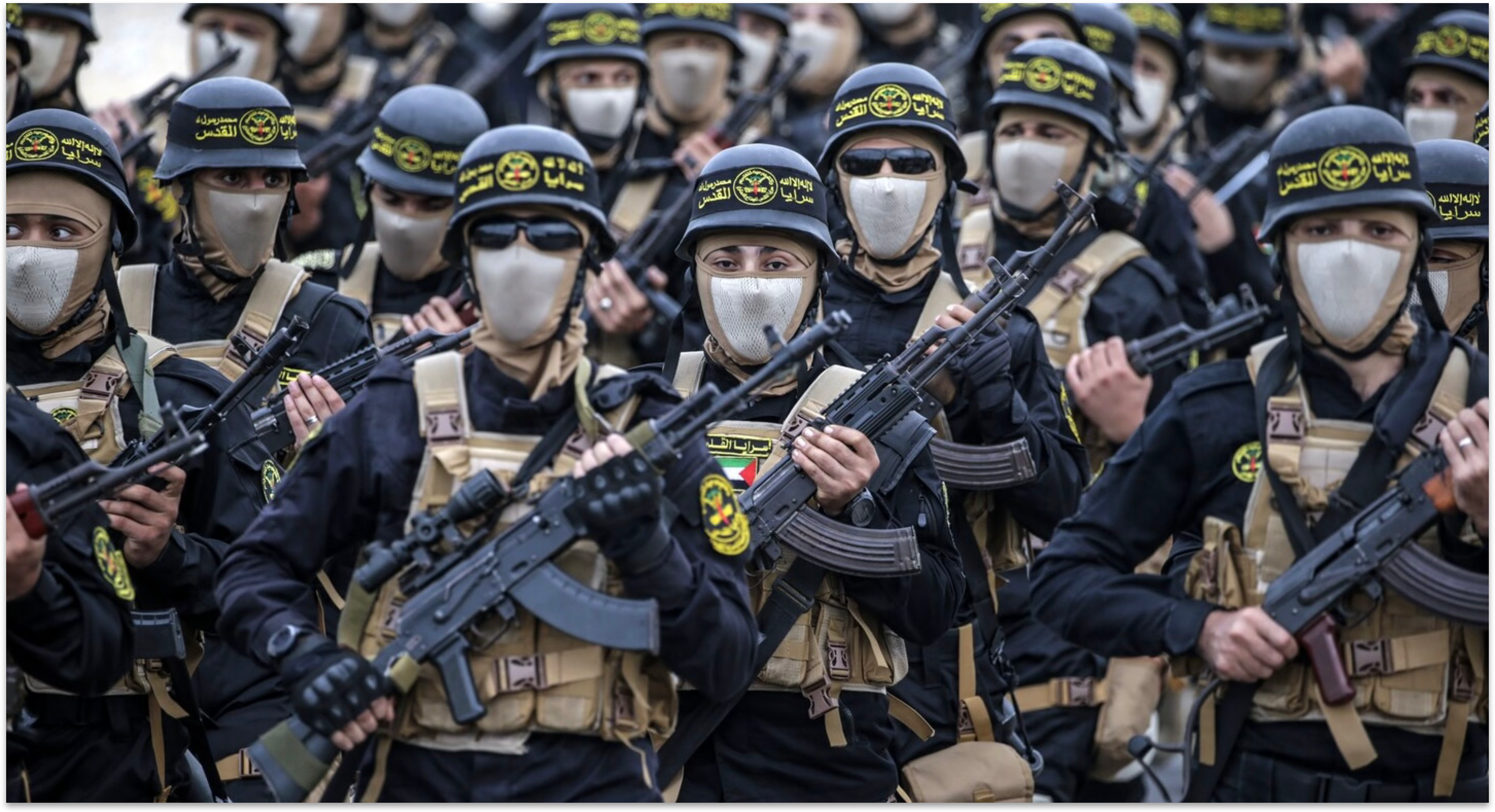
Fighters from the al-Quds Brigades, the armed wing of Palestinian Islamic Jihad, parade in Gaza in 2023 marking the 36th anniversary of the movement’s founding. The al-Quds Brigades is a radical Islamist group designated as a terrorist organization by the U.S., EU, and others for its commitment to armed jihad, rejection of Israel’s existence, and history of rocket attacks and suicide bombings targeting civilians.
This strain is not representative of most Muslims, but it is not marginal in influence or resources. It takes different forms: some gradualist and political, others revolutionary and violent. Jihadist variants see military struggle as an individual duty and often practice takfir to justify targeting other Muslims. A specific and powerful Shia expression, Khomeinism, fuses theocratic rule under the guardianship of the jurist with revolutionary export and strong apocalyptic expectations.
While the vast majority of Muslims reject these interpretations, polls across Muslim-majority societies have shown wide regional variation in attitudes toward sharia as official law and toward certain militant causes. The U.S. has a better track record of integration than parts of Europe in part because of different selection and cultural expectations. The challenge is real and must be named clearly.
Where Radical Islamism Is Most Concentrated
Radical Islamist ideology and its violent expressions are most concentrated in specific countries and enclaves: Iran’s theocratic regime, Taliban-controlled Afghanistan, Hezbollah-dominated areas of Lebanon, Hamas and Palestinian Islamic Jihad strongholds in Gaza, Houthi-controlled regions of Yemen, parts of Pakistan and Somalia where groups like the Taliban and al-Shabaab operate, and remnants of ISIS networks in Syria and Iraq.
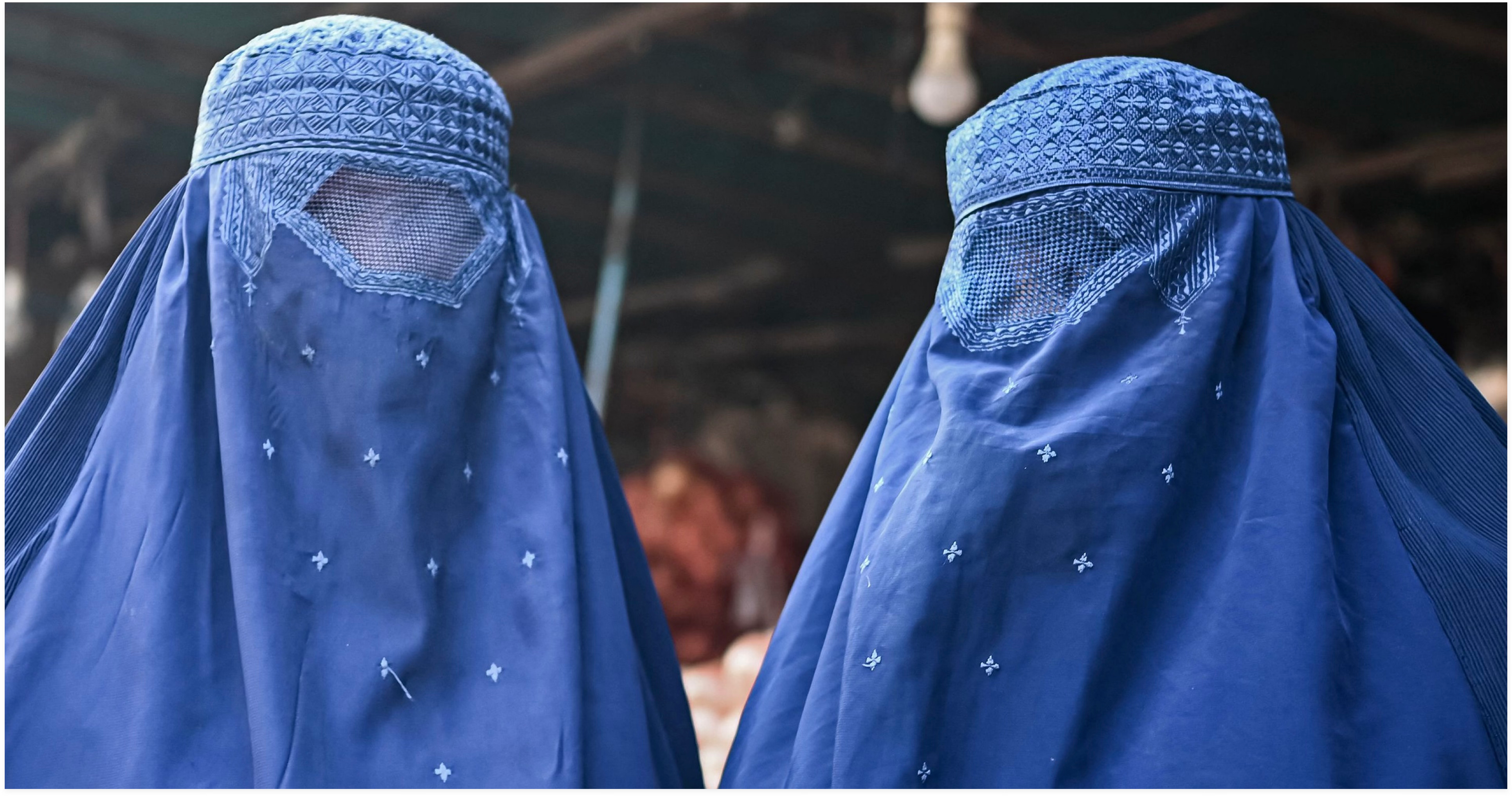
Women in Afghanistan wearing the burqa in compliance with Taliban decrees that mandate full face and body covering in public. Under the current regime, women must be accompanied by a male guardian for long-distance travel, are largely barred from secondary education and many forms of employment, and face punishment for non-compliance.
In the West, parallel societies and radicalization hotspots have emerged in certain neighborhoods of London, Paris banlieues, Swedish “vulnerable areas,” and other European cities with high concentrations of unintegrated migrants from these regions. These are not representative of all Muslims globally, but they illustrate where the supremacist political strain has taken root most deeply.
Iran’s Radical Regime, Ballistic Missiles, and Nuclear Ambitions
The most coherent and dangerous state embodiment of this revolutionary ideology is the Islamic Republic of Iran. Since the 1979 Islamic Revolution, its leaders have been explicit about their mission. The Iranian Constitution commits the Islamic Republic to “the continuation of the Revolution at home and abroad” and to extending “the sovereignty of God’s law throughout the world.” Ayatollah Ruhollah Khomeini, the revolution’s founder, declared: “We shall export our revolution to the whole world. Until the cry, ‘there is no god but God’ resounds over the whole world, there will be struggle.”
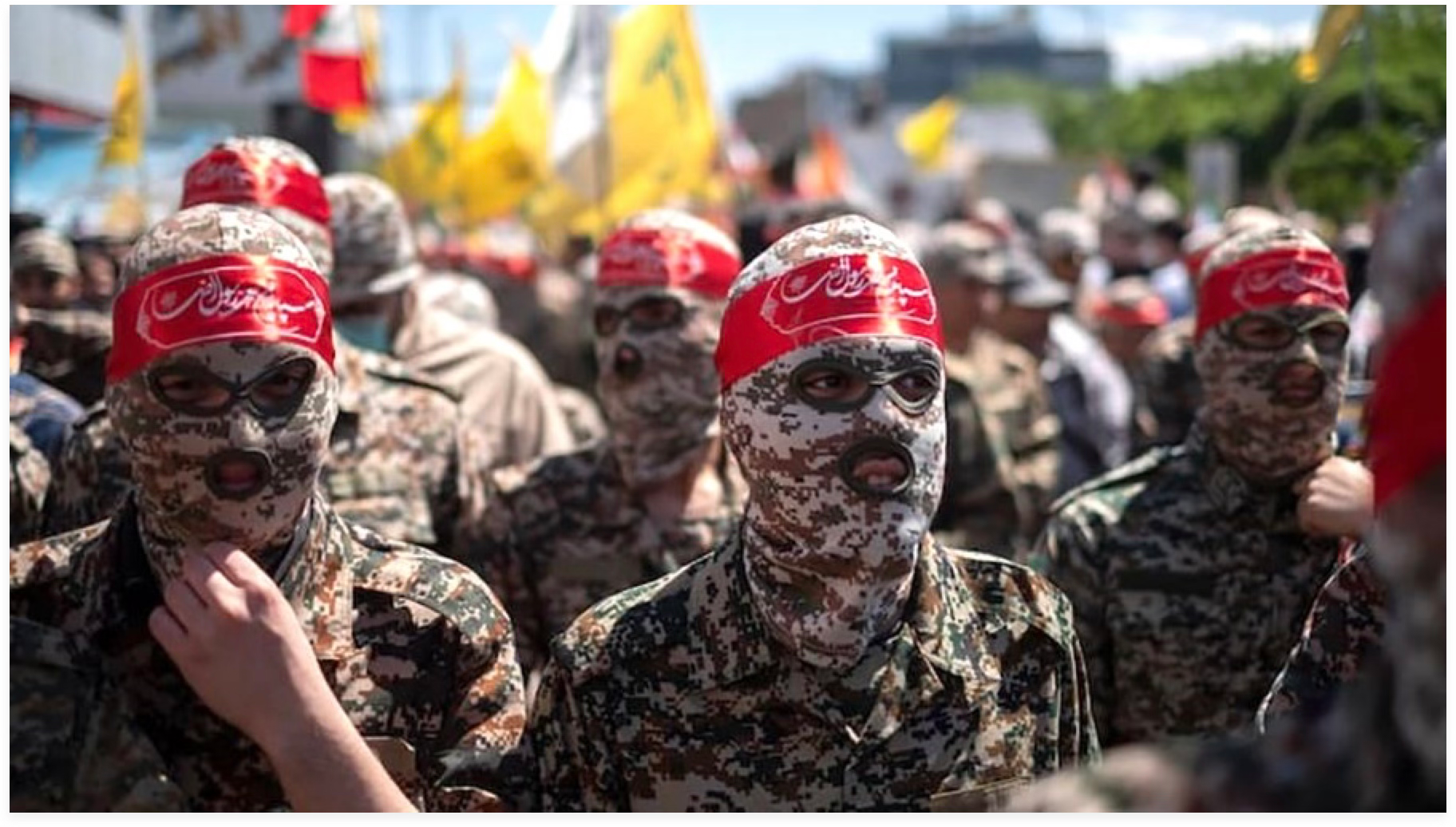
Iran-backed militants affiliated with groups such as Hezbollah or Palestinian Islamic Jihad often appear in similar paramilitary parades and rallies. In a significant step, Argentina designated Iran’s Quds Force — the external operations arm of the Islamic Revolutionary Guard Corps — as a terrorist organization and added it to Argentina’s Public Registry of Entities Connected to Terrorism and its Financing. Iran responded by warning of an “appropriate response.”
Iran has operationalized this vision through the Islamic Revolutionary Guard Corps and a sophisticated network of proxy militias and terrorist organizations — Hezbollah, Hamas, Palestinian Islamic Jihad, the Houthis, and aligned groups in Iraq and Syria. These proxies conduct terrorism, asymmetric warfare, attacks on U.S. forces, and disruption of international shipping.
Militarily, Iran fields the largest ballistic missile arsenal in the Middle East, with systems capable of reaching across the region and into parts of Europe. It has invested heavily in improving accuracy, lethality, solid-fuel technology, and drone swarms. On the nuclear front, Iran has achieved high levels of uranium enrichment and developed the knowledge and infrastructure that bring it close to weaponization capability. While recent U.S. and Israeli actions have degraded some facilities and bought valuable time, the regime retains significant breakout capacity and the political will to reconstitute its program.
A nuclear-armed Iran under this ideology would be a game-changer. It would embolden its proxies, deter conventional responses to its aggression, and pursue the export of revolution under the cover of nuclear deterrence. Its worldview blends explicit anti-Western hatred with messianic expectations of global upheaval preceding the return of the Hidden Imam. For such a regime, nuclear weapons would not be merely defensive tools but instruments in what its leaders see as a divine struggle against a corrupt world order.
This is not a normal nation-state pursuing normal interests. It is a revolutionary theocracy whose founding documents and leaders openly state their intention to overturn the existing international order in service of their interpretation of Islam. Preventing a nuclear-armed Iran is a solemn duty to protect the American people, our allies, and global stability.
Lessons from Western Europe
America has integrated Muslim immigrants more successfully than much of Europe on average, in part because of skilled immigration pathways and clearer expectations of assimilation. Europe’s experience with large, relatively unfiltered inflows from regions with high support for sharia and parallel cultural norms offers a clear cautionary tale.
In the U.K., the 2014 Jay Report documented that at least 1,400 children in Rotherham alone were sexually exploited between 1997 and 2013 by grooming networks composed predominantly of British-Pakistani men. Similar scandals unfolded in Rochdale, Oxford, Telford, and other towns. Police, social services, and local councils repeatedly failed to intervene decisively — in significant part because of fears that identifying ethnic and cultural patterns would trigger accusations of racism. Victims were often dismissed or ignored.
In Germany, the 2015–2016 New Year’s Eve celebrations saw more than 1,200 women sexually assaulted in Cologne and other cities, with large groups of perpetrators identified as men of North African and Arab origin, many of them recent asylum seekers. Official reports confirmed the scale and the demographic pattern.
In Sweden, Prime Minister Magdalena Andersson stated in 2022 that integration of large-scale immigration had failed, producing parallel societies and fueling organized gang violence. Foreign-born individuals and their children are dramatically overrepresented in serious violent crime; analyses found that 76% of top street gang members were immigrants or children of immigrants. “Vulnerable areas” exist where police struggle to operate and clan structures challenge Swedish law. Honor-based violence and benefit dependency have become documented problems.
These outcomes were not inevitable and do not indict every individual immigrant. They resulted from policy choices that prioritized volume and humanitarian signaling over rigorous filtering for cultural and ideological compatibility, combined with multicultural approaches and political correctness that discouraged honest assessment of values gaps on gender, free speech, secular law, and assimilation. Many Muslim immigrants integrated successfully. The system-level failures occurred where incompatible ideologies and practices were imported at scale without selection or enforcement of host-society norms.
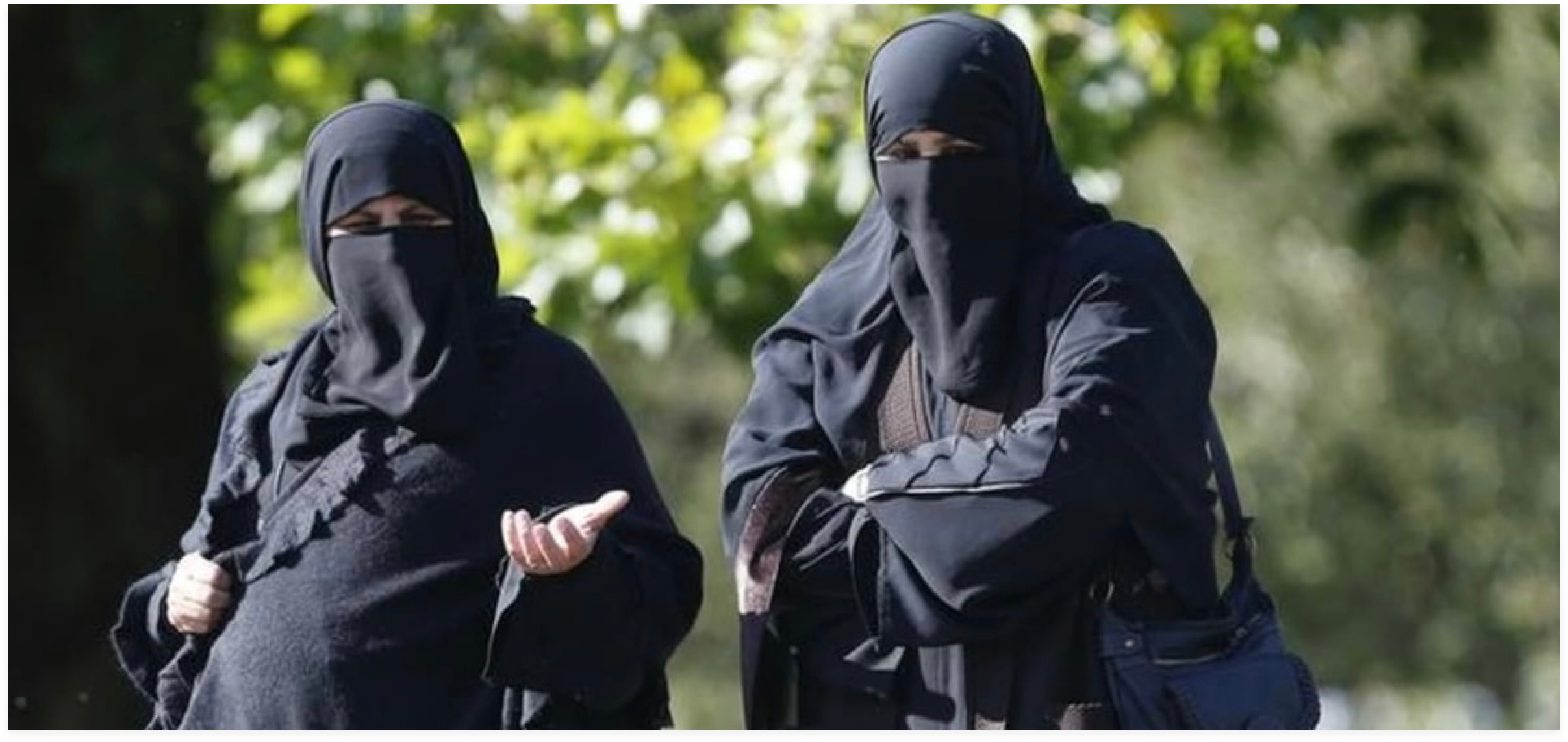
Women wearing the niqab in London, where pockets of conservative Muslim communities have formed parallel societies resistant to assimilation into British values. These areas have been associated with sharia patrols, grooming gang scandals (e.g., Rotherham), demands for gender segregation, and rejection of core Western principles like free speech and equality.
Principled Immigration Filtering and Enabling Success
Effective immigration filtering is not bigotry; it is the opposite of collective punishment. It means rigorous, multi-layered screening, criminal and security checks plus assessment of compatibility with core American principles — constitutional supremacy over any religious law, gender equality, freedom of speech and conscience (including the right to criticize religion), and rejection of supremacist or jihadist doctrines.
It means prioritizing skilled immigrants who demonstrate genuine assimilation capacity — precisely the pathway that has brought so many successful Muslim professionals to Silicon Valley and allowed them to contribute to American innovation. It means setting numbers calibrated to integration capacity, enforcing deportation of those who advocate or engage in radicalism, and ending policies that import unvetted populations from high-risk ideological environments.
We can and should continue welcoming peaceful Muslims who want to live by our rules and contribute to our economy and culture. America already does this better than Europe in many respects. But we must stop pretending that all inflows are equal or that asking hard questions about values compatibility and security is somehow un-American. The alternative is to repeat Europe’s mistakes on a larger scale and erode the very conditions that allow Muslim Americans in tech and elsewhere to thrive.
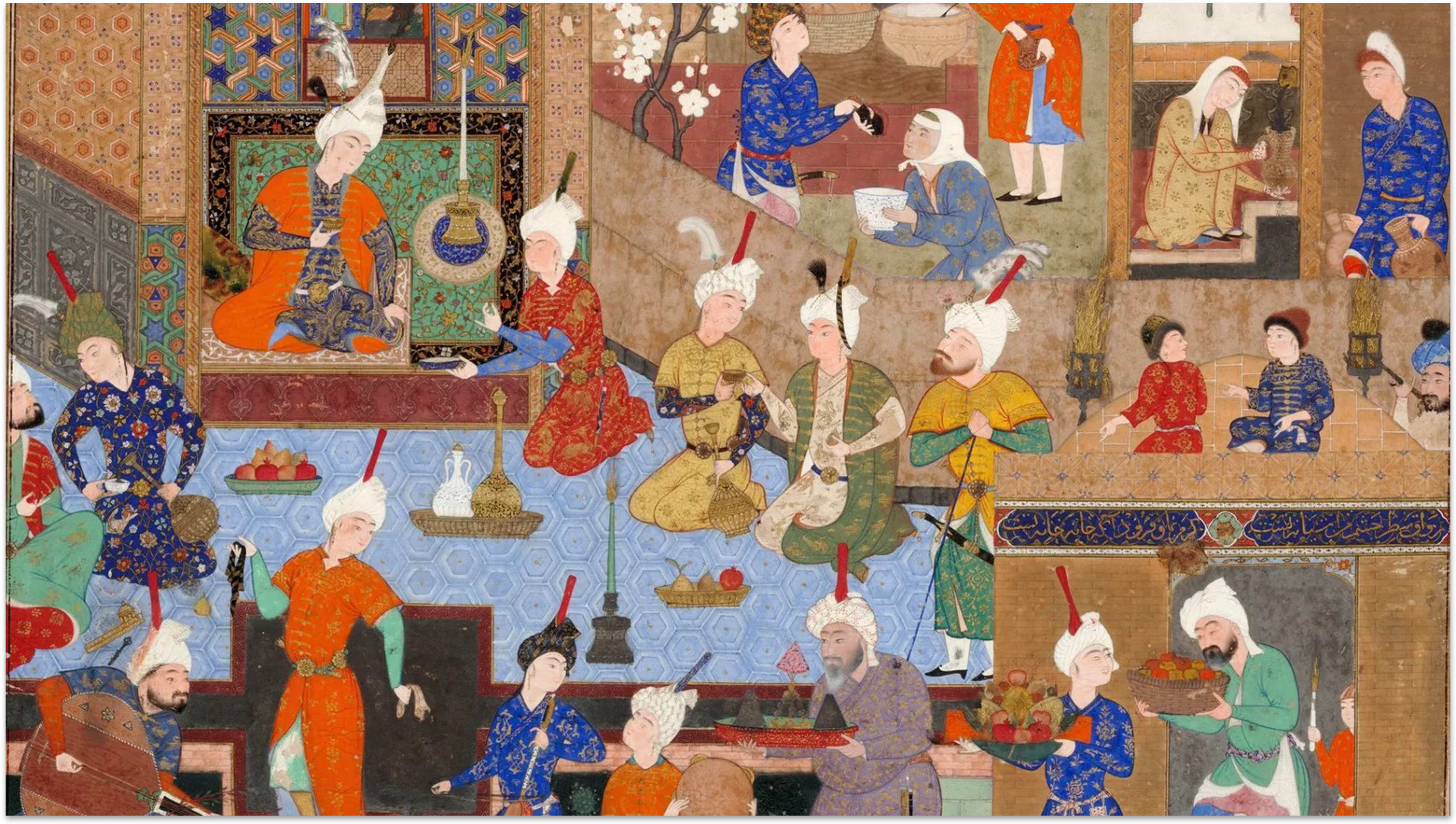
Persian miniature painting of a courtly or scholarly gathering, 16th–17th century (Safavid period style). Representing the rich tradition of learning, culture, and civilized discourse in Islamic civilization’s historical golden eras.
Educational Responsibility and Moral Clarity
As Americans, we have a further responsibility: to understand these distinctions ourselves rather than relying on caricatures or slogans. That means studying:
Islamic expansion through conquest in the 7th and 8th centuries
Development of different schools of law and theology
The Sunni-Shia divide
The Ottoman millet system
The impact of European colonialism
Modern revivalist movements that produced today’s Islamist ideologies
It means reading the Quran and the traditions of the Prophet with awareness that, while there are verses and examples of peace and coexistence, there are also passages and classical legal concepts — including notions of jihad as expansion, dhimmitude, and hudud punishments — that radical interpreters have weaponized.
It means recognizing and amplifying Muslim reformers who argue for contextual interpretation, abrogation of certain verses in modern contexts, and compatibility with democracy and human rights.
We are not at war with Islam or Muslims. We are defending against radical Islamist regimes and terrorist organizations that distort the faith for political and expansionist ends. Many Muslims worldwide, especially inside Iran, are victims of this ideology and yearn for freedom. Our policy must combine unwavering resolve against the threat with consistent charity toward peaceful practitioners.
Cryptonite’s Take
Strength without clarity is dangerous. Clarity without strength is futile.
We must support maximum pressure on the Iranian regime and its terrorist networks — through sanctions, diplomatic isolation, support for internal opposition movements such as the “Woman, Life, Freedom” protests, intelligence cooperation, and, when necessary and justified, targeted military action to prevent nuclear breakout and degrade capabilities.
We must support immigration filtering that protects American constitutional principles and enables successful integration rather than importing parallel societies.
We must defend the right to discuss these distinctions without being smeared as bigots.
We must celebrate the contributions of peaceful Muslim Americans, especially those building the future in Silicon Valley and across the innovation economy.
This is not a simplistic clash of civilizations. It is a struggle between those who believe legitimate government rests on consent of the governed and equal dignity under law, and those who believe sovereignty belongs exclusively to their interpretation of divine law. We did not choose this struggle, but we must not shrink from it. We must chart a course of strength, wisdom, and unity — advocating the protection of the American people while remaining open to individuals of character and talent who embrace our country’s founding principles.
This editorial is intended as a reference document for discussions on Iran, radical Islamism, and immigration policy. It will be refined and edited over time in accordance with new observations and impacts of future world events.
As always, we are open for dialogue and ready to adjust our thinking when required.