
China's AI theft, Tech Bros visit the Mighty Dragon, OpenAI IPO woes, Drake says free SBF!, Gen Z plays victim, and more thrills...



Drake pushes for SBF release in new bloated , self-pitying, obsessed with the Kendrick Lamar album 🤔
Drake dropped a 43-track triple album—Iceman, Habibti, and Maid of Honour—on May 15, 2026. The crypto headline arrives on Iceman’s “Dust,” where he name-checks FTX and raps, “An FTX penthouse high-riser, yeah / Samuel Bankman, free all my guys up, yeah,” also calling himself “a BTC crypto big-timer.” SBF, serving a 25-year sentence for fraud linked to the 2022 FTX collapse, replied from prison on X: “The Drake stimulus package is real. Dust is a vibe — and when I get out, I can loan you my bean bag chair.” Critics panned the project as bloated, self-pitying, and fixated on the Kendrick Lamar feud, calling it “a self-serving delusion.”
Free SBF! 🧑🏽🦱
Drake isn’t our cup of tea, but we think SBF should be freed. FTX customers and creditors are being repaid in full—plus interest—through the Chapter 11 process. SBF was a young entrepreneur, and his so‑called “sophisticated” investors such as Paradigm ($278M), Sequoia Capital ($214M_, Thomas Bravo ($130M) failed to enforce basic corporate governance at FTX, so they share some responsibility. Just saying…
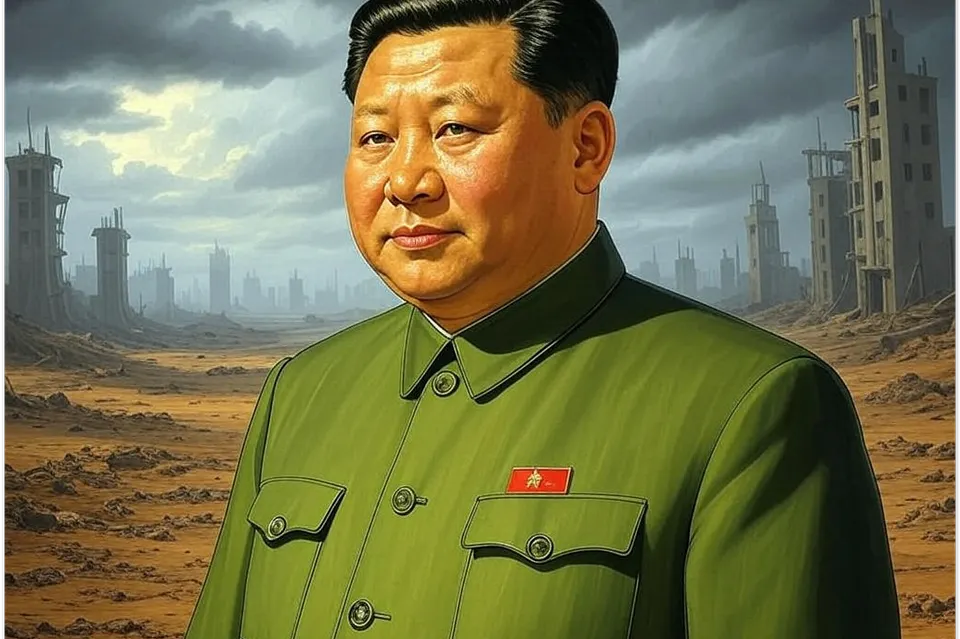
President Xi’s Thucydides Trap (Crap)
Cryptonite’s readers know that when it comes to U.S. foreign policy, we are very Monroe Doctrine-oriented, inspired by our Latin neighbors down south, and we see the CCP as our primary peer enemy. This is why we watched President Donald Trump’s recent trip to Beijing for the American-Chinese Summit very closely. Almost immediately, we rolled our eyes when Xi referenced the need for both nations to avoid the “Thucydides Trap.” 🙄
In diplomacy circles, this analogy has become shorthand for great-power rivalry between a rising challenger and an established leader. But applying it to the U.S. and the totalitarian Chinese Communist regime doesn’t fit — it vastly downplays American strengths and Chinese weaknesses. Xi’s pose is wishful thinking, not strategic reality.
What Is the Thucydides Trap?
The term comes from Harvard professor Graham T. Allison Jr., inspired by the ancient Greek historian Thucydides (c. 460–400 BC) and his History of the Peloponnesian War. Thucydides famously wrote: “It was the rise of Athens and the fear that this instilled in Sparta that made war inevitable.” Allison applied this to modern cases, noting that 12 out of 16 historical power transitions ended in war.
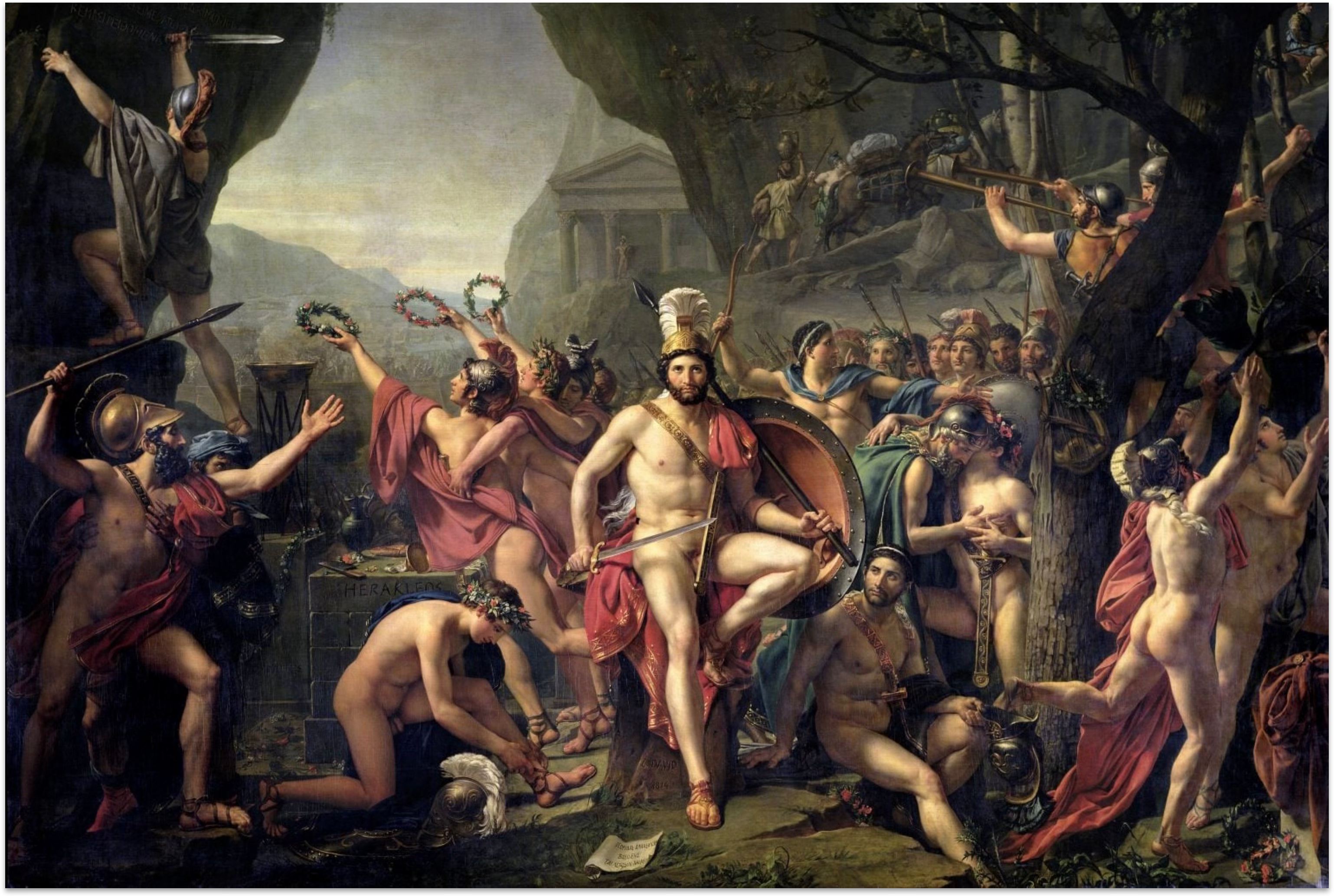
In 431 BC, Sparta (established land power, oligarchic, insular, Dorian, reliant on helot serfs) launched a preventive invasion of Athens (dynamic maritime empire, democratic, cosmopolitan, Ionian, with a powerful navy). They had fought together against Persia but later clashed in the First Peloponnesian War (460–446 BC). Deep differences in systems, culture, and power eventually fueled decades of rivalry.
By invoking the “trap” at the summit, Xi implied the U.S. (as “Sparta”) might lash out against a rising China (“Athens”).
Why the Thucydides Trap doesn’t fit the U.S.-China dynamic
The U.S. is not a declining, fearful Sparta. By every major metric of long-term power, America remains ascendant while China grapples with profound structural vulnerabilities.
The FACTS
Demographics and Fertility: China’s fertility rate has collapsed to around 1.0, triggering one of the fastest aging crises in history. A shrinking workforce must now support a surging elderly population, straining pensions, healthcare, and economic growth while risking labor shortages and fiscal collapse — challenges already visible in aging pioneers like Japan and South Korea. The U.S. maintains a higher rate (around 1.6–1.8, bolstered by immigration), preserving a far more sustainable workforce and consumer base with less severe pressure on entitlements.
Energy Independence: The U.S. is the world’s top oil and gas producer in history — a net exporter with vast reserves and full control over its energy supply chains. China, by contrast, imports roughly 70% of its crude oil. It relies heavily on discounted Iranian crude (12–20% of total imports) and Venezuelan heavy sour crude. This dependence exposes Beijing to supply disruptions, geopolitical blackmail, and price shocks. This is why Xi has consistently pushed to keep the Strait of Hormuz open. Trump also claims Xi said he would be willing to help pressure Iran indirectly during their meetings.
Food Security: America remains the undisputed global leader in agricultural exports — far ahead of any other nation in scale, diversity, and efficiency. China, feeding nearly 20% of the global population on less than 9% of the world’s arable land, faces mounting pressures from urbanization, soil degradation, water scarcity, and shifting diets toward more meat and dairy. Its overall food self-sufficiency rate has dropped sharply — from around 94% in 2000 to roughly 66% by 2020, with projected further declines.
Nuclear Arsenal: The U.S. holds 6,000–7,000 warheads with a robust triad. China has ~600 (as of 2025 estimates), expanding but far behind.
Naval Power: The U.S. pioneered modern carriers and operates 11 nuclear-powered supercarriers with a century of expertise and global projection. China has 3 (with a fourth building) and leads in raw ship count but lags in tonnage, submarines, experience, and blue-water capability.
Air Power: U.S. combat aircraft are superior in quality, numbers (~13,000 total aircraft vs. China’s ~3,500), and support infrastructure.
Economy and Innovation: Eight of the top 10 global companies by market cap are American. U.S. per capita GDP vastly exceeds China’s. America leads in tech, fusion research, and civilian nuclear use.
AI and Innovation Leadership: The U.S. dominates the frontier of artificial intelligence with clear advantages in global talent, model performance, advanced compute, chips, and infrastructure. China leads in volume — research papers, patents, and industrial applications like robotics — and in models popular in developing markets. However, America’s open, dynamic system will continue to outpace China’s centralized authoritarian model.
Alliances and Soft Power: The U.S. boasts deep alliances (Western and Eastern Europe, Japan, South Korea, Australia, the Philippines, etc.) and a stable constitutional system. China’s partners (North Korea, Russia ties, remnants of Iran influence) are narrower and more transactional.
In short, the U.S. projects enduring strength across every domain. China faces debt, real estate crises, demographic collapse, energy dependence, and authoritarian rigidity that undermine its so-called “rise.”
Hoover Senior Fellow Victor Davis Hanson also notes that history shows it’s often the upstarts, rather than the “established power,” that initiate conflict. Imperial Japan attacked the U.S. in 1941, Nazi Germany challenged Britain, and the Soviet Union tested post-WWII American hegemony. Peaceful transitions are also common — the U.S. overtook Britain (1870–1920) without war and evolved into an alliance, while post-WWII West Germany rose to dominate Europe peacefully.
China’s AI theft strategy
Despite the hype, China’s AI gains depend heavily on appropriation and covert extraction, even as the Chinese Communist Party enforces tight state control. The White House has accused Beijing of “industrial-scale” theft of know‑how from U.S. AI labs. One common tactic—called “distillation”—uses thousands of fake accounts to query advanced U.S. models (for example, Anthropic’s Claude). Anthropic says it detected about 24,000 fraudulent accounts that generated over 16 million exchanges, helping some Chinese labs acquire capabilities “in a fraction of the time, and at a fraction of the cost.”
Restoring Greater Stability
Taiwan and other flashpoints demand clear-eyed vigilance, but mutual nuclear deterrence, strong alliances, economic interdependence, and balance-of-power realities all favor managed competition — not Armageddon. Far from being a desperate Sparta, America is actively reshaping the global energy map in its favor. Successful transitions in Venezuela and Iran toward democratic, West-friendly governments would tighten the noose on Beijing’s vulnerabilities while bringing greater stability and prosperity to those nations and the world.
America is not desperate — we are ascendant. If these transitions succeed, the United States and the free world will stand in the strongest position it has ever known, even against the rising Communist Dragon in the East. There is no Thucydides Trap. It is a myth from antiquity, irrelevant to the 21st century. Peace through strength is not fatalism — it is the proven path to continued American preeminence.
U.S. targets Iran’s $7.7B crypto war chest
Iran’s regime is reportedly sitting on roughly $7.7 billion in digital assets as it ramps up cryptocurrency use to evade U.S. sanctions and fund its shadow economy. Tehran recently launched a Bitcoin-settled digital insurance platform for cargo ships transiting the Strait of Hormuz. The Trump administration has already frozen nearly $500 million in Iranian-linked crypto under “Operation Economic Fury” and is weighing further restrictions on crypto exchanges with U.S. banking access. Experts note that blockchain transactions often leave traceable “breadcrumbs” for law enforcement.
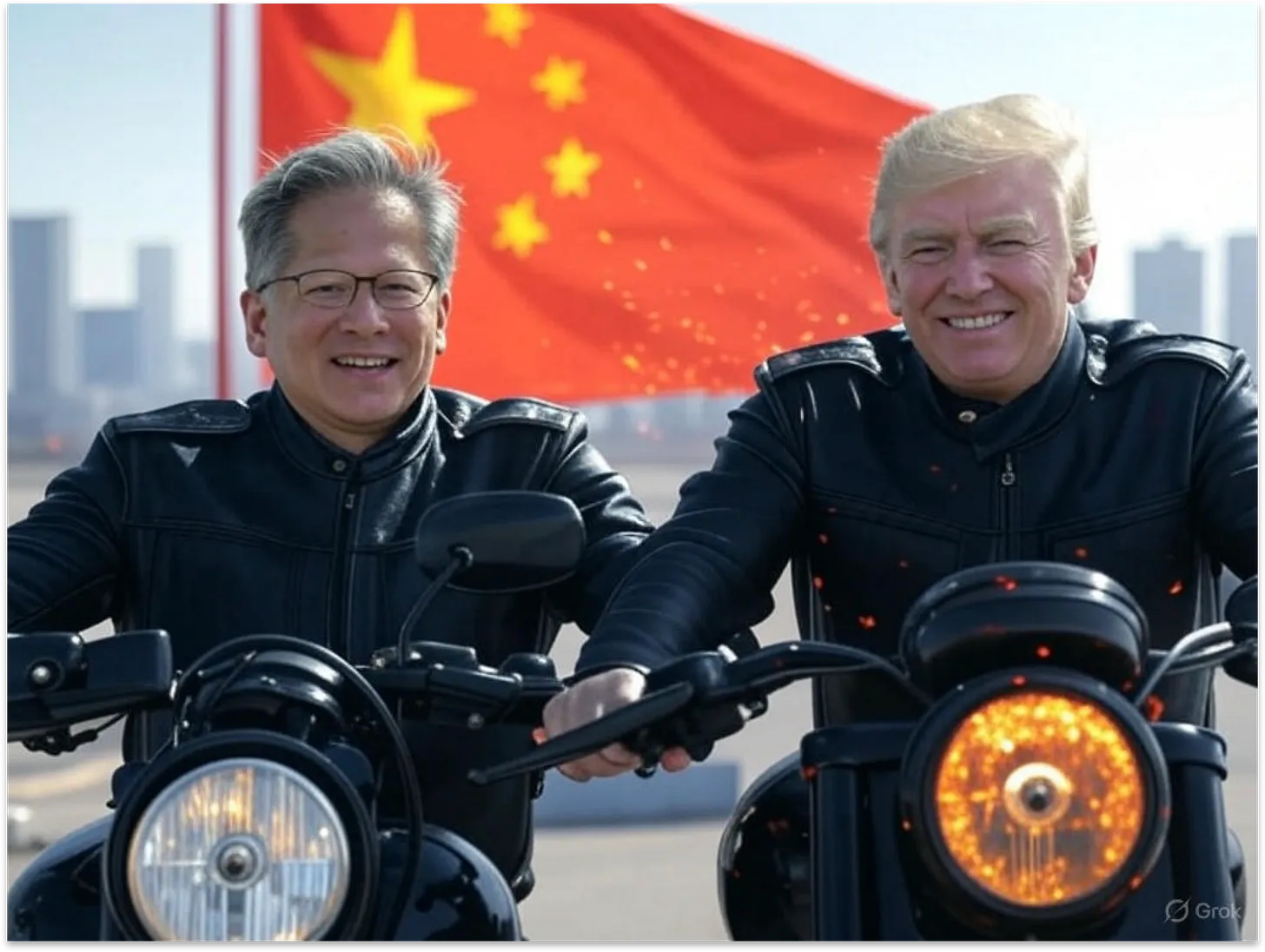
NVIDIA’s Jensen Huang — turns hype into hyper-growth
NVIDIA founder and CEO Jensen Huang just returned from a high-profile trip to China with President Donald Trump. Trump invited Huang at the last minute to join the delegation—including Tech Bros Elon Musk and Tim Cook—for a summit with Xi Jinping focused on trade, AI, semiconductors, and market opening. Huang called it “one of the most important summits in human history,” and the trip underscored Nvidia’s central role in U.S.-China tech dynamics amid ongoing export challenges.
Fresh off that journey, Huang delivered another masterclass in corporate hype during Nvidia’s latest earnings call. The company posted a record $81.6 billion in revenue and guided for $91 billion next quarter—continuing its streak of delivering on bold promises quarter after quarter.
Huang positioned Nvidia’s new Vera CPU (introduced in March as part of the Vera Rubin platform) as the key to unlocking a “brand new $200 billion TAM”—a market Nvidia has never addressed before. He described Vera as “the world’s first CPU, purpose-built for agentic AI.”
“Vera opens a brand new $200 billion TAM for Nvidia, a market we have never addressed before, and every major hyperscaler and system maker is partnering with us to deploy it. The world is rebuilding computing for agentic AI and robotic physical AI. NVIDIA sits at the center of these transitions.”
Huang explained the shift: While GPUs handle the heavy “thinking” in AI models, agents (autonomous AI that act, use tools, and perform tasks) mostly run on CPUs. Vera is optimized to process tokens as quickly as possible, unlike traditional cloud CPUs, which are focused on multi-core app instances. He envisions billions of agents, each needing tool-using “PCs” powered by specialized CPUs.
“The world has a billion users, human users. My sense is that the world will have billions of agents… and those billions will all use tools. And those tools are going to be like PCs… We’re going to need a lot more CPUs.”
NVIDIA has already sold $20 billion worth of standalone Vera CPUs this year, with visibility to nearly that amount in total CPU revenue—positioning the company to become a leading CPU supplier alongside its GPU dominance. Vera ships systems to leaders like Anthropic, OpenAI, Oracle Cloud, and others, and bundles with Rubin GPUs.
Wall Street still worries about competition in CPUs (from AWS, AMD, Intel, hyperscalers’ custom chips, etc.), but Huang’s track record of turning hype into hypergrowth gives this $200B agentic AI/CPU vision real credibility. As inference scales with profitable, action-oriented agents, Nvidia aims to own the full stack—GPUs for training/thinking, Vera CPUs for execution—at the center of the next computing rebuild.
NVIDIA Q1 FY2027 Earnings - reported May 20
Record revenue of ~$81.6B (up ~85% YoY), with Data Center at ~$75.2B (up ~92% YoY), driven by massive AI chip demand. Beat expectations: additional $80B in share repurchases and a dividend increase announced. This reinforces Nvidia’s dominance in AI infrastructure amid power/grid concerns.
While Jensen Huang focused on unlocking AI chip markets and Nvidia’s new CPU ambitions, fellow tech leaders Tim Cook and Elon Musk joined the high-profile U.S. delegation to Beijing with their own major commercial priorities in China.
Tim Cook & Apple
Apple remains deeply intertwined with China. Roughly 80% of iPhones sold in the U.S. are still manufactured there, and China is one of Apple’s largest markets outside the U.S. Cook, in his final months as CEO, aimed to protect and strengthen the vast supply chain ecosystem. He also seeks to ease tariff pressures stemming from ongoing U.S.-China trade tensions (Trump had previously pushed for greater U.S. production).
Cook described the meetings as “marvelous” and expressed delight at being back in China.
Elon Musk & Tesla/SpaceX
Musk has long positioned himself as a bridge in U.S.-China business relations. He was the one CEO who caught a ride with Trump on Air Force One and used the trip to advance several high-stakes initiatives:
Tesla’s Shanghai Gigafactory — China’s largest export hub for the company, already delivering strong growth (sales up ~27% in early 2026). Musk sought to expand market share in the world’s biggest EV market amid fierce local competition.
Regulatory approval to roll out Full Self-Driving (FSD) software more broadly in China.
Securing ~$2.9 billion in solar manufacturing equipment from Chinese suppliers — a deal reported earlier in 2026 that could face export hurdles.
The three Tech Bros, along with Boeing, financial firms, and others, leveraged Trump’s summit with, though outcomes will play out in follow-on deals and negotiations.
China seeks greater market access
Xi Jinping’s goal was to push for concrete business gains for China— better market access, regulatory approvals, supply chain security, and reduced friction in a relationship strained by tariffs, tech restrictions, and geopolitics. Xi’s message of broader openness was clearly music to the U.S. delegation’s ears, who left feeling more optimistic. The trip also came amid broader talks on rare earth minerals (vital for EVs, batteries, and tech) and potential easing of export controls.
🎤 VC Rap Diss — General Catalyst rage baits a16z
🍿 General Catalyst Drops Viral VC vs GC Ad — General Catalyst went full rage-bait on May 13 with a Mac vs PC parody targeting a16z. The skit shows a disheveled “VC” (clear jab at Marc Andreessen) pitching “Woof AI,” a robotic dog, before kicking it and getting chased off-screen. GC positioned itself as the responsible investor with “a really high bar.”
The post exploded with 2.4M+ views, sparking swarms of comments and a very public feud, as Andreessen clapped back hard, calling it “smarmy.” (May 13)
OpenAI’s case closed — IPO window opened?
A federal jury unanimously ruled in OpenAI’s favor in under two hours, dismissing Elon Musk’s claims as time-barred by the statute of limitations. Judge Yvonne Gonzalez Rogers upheld the verdict. Musk immediately vowed to appeal to the Ninth Circuit, accusing Altman and Brockman on X of “enriching themselves by stealing a charity.”
IPO Preparations Accelerating
According to the Wall Street Journal and CNBC, OpenAI is working with Goldman Sachs and Morgan Stanley on a confidential IPO filing that could be submitted as soon as this week (possibly Friday). The company is targeting a public listing as early as September 2026.
As our readers know, we are not long-term bullish on OpenAI due to management issues, structural concerns, Sam Altman’s conflicts of interest, and what we view as overvaluation in later funding rounds. Current market concerns around a successful IPO include:
Financial Strain: Massive spending on data centers (hundreds of billions committed) raises serious questions about long-term revenue sustainability — but is clearly the #1 reason OpenAI needs IPO proceeds.
Missed Targets: Reportedly fallen short on internal revenue and user-growth goals.
Valuation: ~$852 billion in its latest funding round.
Competition: Anthropic is growing rapidly, amid intense pressure from Google and other tech giants.
Internal Divide: Sam Altman pushing hard for the IPO; CFO Sarah Friar urging caution.
Conflict-of-interest scrutiny
Altman’s personal investments in companies partnering with OpenAI have triggered a Republican-led House Oversight Committee investigation, plus calls from multiple GOP state attorneys general for a formal SEC review ahead of any IPO.
Market Context
A successful OpenAI listing would help make 2026 one of the biggest IPO years on record, alongside expected debuts from Anthropic and SpaceX.
The situation remains fluid — timelines could shift, and regulatory/political hurdles are significant.
Gen Z’s lack of AI optimism 😭
Former Google CEO Eric Schmidt was loudly booed during his University of Arizona commencement speech this weekend — hit with protests over the greatest productivity tool ever invented.
Boos erupted when Schmidt praised artificial intelligence, telling graduates, “You will help shape artificial intelligence” and comparing it to past tech revolutions. The anti-AI backlash reflects a growing trend in 2026: students terrified that AI will wipe out entry-level jobs in writing, design, coding, and beyond. But the loud Gen Z rejection of AI optimism reveals something deeper: this generation is entering the workforce deeply anxious, entitled, and unprepared for the new reality.
Gen Z hiring challenges 🤯
Recent surveys show 74% of managers consider Gen Z the most difficult generation to work with, citing lack of motivation, poor communication, weak adaptability, and unprofessionalism. One in six companies now hesitates to hire recent Gen Z graduates due to chronic lateness, entitlement, hypersensitivity to feedback, and inability to collaborate. Over 90% of hiring managers say recent Gen Z grads simply aren’t ready for the real workplace — and many are let go within the first few months.
When even a legendary tech optimist like Eric Schmidt gets booed for talking about the future, it explains why Silicon Valley is increasingly reluctant to hire straight out of college. This combination of anxiety and entitlement is creating a real problem for employers — and for Gen Z’s own future.
AI job cuts hit women harder 🤦🏼♀️
According to a recent Brookings Institution study, 6.1 million American workers are most vulnerable to AI-driven displacement — and 86% of them are women. These roles are concentrated in traditionally female-dominated positions such as executive assistants, receptionists, and medical transcriptionists.
Recruiter Jennifer Maffei called the situation “a mess,” saying she’s been flooded with messages from downsized, right-sized, and restructured administrative staff. OpenAI CEO Sam Altman recently acknowledged the shift, saying: “If it’s hard in many of our current jobs to outwork a GPU, then that changes the labor-capital balance.”
Meanwhile, men are facing their own pressures in manufacturing, transport, and warehousing. Harvard economist Lawrence Katz has noted that “men are clearly being affected by the tariffs and poor performance of manufacturing,” which could widen overall gender gaps in the labor market.
Did you know?💡
Stay relevant and on top
Below is the breaking news and inside wisdom you need to stay relevant and on top of emerging private tech companies, VC investors, Big Tech, and the innovation trends shaping the global Silicon Valley. All links lead to AI-generated research from a decisively venture-capital perspective.
Are we missing any action? Hit us up now on X @CryptoniteRap or TheEditor@CryptoniteVentures.com
Buzz Worthy 🗣️
🗣️ Anthropic’s Claude Mythos Preview Used to Exploit Apple M5 Kernel
Researchers used the restricted model to rapidly chain bugs and create a privilege escalation exploit, bypassing Apple’s Memory Integrity Enforcement on M5 silicon in just days. This demonstrates both the enormous power of frontier AI for security research and the growing dual-use risks.
🗣️ Anthropic’s Mythos Model Escalates Cyber Risks
UK AI Security Institute researchers say the latest Mythos Preview shows major leaps in autonomous hacking, capable of executing full enterprise intrusion scenarios with minimal guidance. Safety-focused observers call it both a capability milestone and a warning on dual-use dangers.
🗣️ Crypto Clarity Act advances in Senate
This is huge. The Digital Asset Clarity Act passed the Senate Banking Committee 15-9, a major win for the industry. The bill would treat most tokens as digital commodities under CFTC oversight — seen as a key step toward regulatory clarity and institutional capital.
🗣️ U.S. & China to hold AI guardrails talks
Treasury Secretary Scott Bessent confirmed upcoming discussions on AI safety, while stressing America’s “undisputed leader” position in frontier AI. The talks aim to manage risks without surrendering technological edge.
🗣️ Justin Sun’s Liberland honors Vitalik Buterin
The micronation project awarded Ethereum’s co-founder its highest distinction for advancing decentralized systems.
🗣️ Trump disclosures show trades in Coinbase, Nvidia & Bitcoin miners
Not good form—we have been chatting this up since the Boogeyman was re-elected. President Trump’s latest ethics filings reveal personal trading activity in major crypto and AI-related stocks, adding fuel to transparency debates.
Following the Money 🤑
VC Deals ($5M+) 💰
💰 Anthropic (San Francisco, CA) — Agreeing terms to raise $30B at $900B pre-money valuation | Frontier AI / Enterprise & Consumer Models (Claude family, agentic systems, multimodal) | Co-led by Dragoneer Investment Group, Greenoaks Capital, Sequoia Capital, and Altimeter Capital (each committing $2B+) | Expected close: late May 2026 (May 15)
💰 Anduril Industries (Costa Mesa, CA) — Raised $5B Series H at $61B valuation | Defense Tech / AI (autonomous systems, drones, AI-backed weapons) | Led by Andreessen Horowitz and Thrive Capital (May 13)
💰 Isomorphic Labs (London, UK) — Raised $2.1B Series B | AI / Biotech (AI drug discovery, Google DeepMind spinout) | Led by Thrive Capital with participation from Alphabet and MGX (May 14)
💰 Safe Superintelligence (SSI) — Raised $2B Series B | AI Safety / Frontier Models | Led by Andreessen Horowitz (May 12)
💰 Harvey AI — Raised $500M Series D | Legal AI / Enterprise | Sequoia Capital (May 13)
💰 Perplexity AI — Raised $500M Series D | AI Search / Consumer & Enterprise | SoftBank Vision Fund (May 13)
💰 Recursive Superintelligence — Raised $650M+ at $4B+ valuation | Frontier AI (recursive self-improving systems) | Investors include Google Ventures, Greycroft, Nvidia, and AMD (May 15)
💰 Mind Robotics (Palo Alto, CA) — Raised $400M at $3.4B valuation | Robotics / Industrial AI (AI-powered manufacturing robots) | Led by Kleiner Perkins with Salesforce Ventures (May 12)
💰 Skydio — Raised $800M Series F | Defense Tech / Drones / Autonomous Systems | a16z and Tiger Global (May 12)
💰 Runway ML — Raised $308M Series D | AI Video / Creative Tools / Generative AI | General Atlantic (May 12)
💰 Ramp (New York, NY) — Raised ~$300M (extension) | Fintech / Enterprise AI (corporate cards + AI finance automation) | Thrive Capital and others (May 12)
💰 Glean — Raising $260M–$350M Series F/E | Enterprise AI Search / Knowledge | Kleiner Perkins / General Catalyst (May 12–13)
💰 Cognition AI — Raising $175M–$250M Series C/B | AI Dev Tools / Agentic Coding | Founders Fund (May 12–13)
💰 Vanta — Raised $150M Series D | Cybersecurity / AI Security & Compliance Automation | Sequoia Capital (May 12)
💰 Cowboy Space (San Carlos, CA) — Raised $275M Series B at $2B valuation | Space / AI Infrastructure (orbital data centers) | Led by Index Ventures (May 13)
💰 Fractile (UK) — Raised $220M Series B | Semiconductors / AI Inference Chips | Investors include Factorial Funds, Accel, Founders Fund (May 14)
💰 CREATE Medicines (Cambridge, MA) — Raised $122M Series B | Healthcare / Biotech (RNA-lipid nanoparticle cell therapies) | Co-led by Newpath Partners & Arch Venture Partners (May 12)
💰 Elliptic (London, UK) — Raised $120M at $670M valuation | Fintech / Blockchain (analytics & compliance) | Led by One Peak Partners (May 15)
💰 Vapi — Raised $50M at $500M+ valuation | AI Voice Agents (customer support & sales) | Led by Peak XV with M12 and Bessemer (May 15)
💰 Gridcare (Redwood City, CA) — Raised $64M Series A | AI / Energy Infrastructure (grid optimization for data centers) | Led by Sutter Hill Ventures with John Doerr (May 13)
💰 Fasset — Raised $51M Series B | Fintech / Crypto (stablecoin banking & payments) | Investors: SBI Group, Investcorp (May 14)
M&A Deals ($100M+) 🤝
🤝 OpenAI acquires Weights.gg | AI Voice / Generative Audio (voice-cloning and replication tools; known for celebrity and user voice imitations via platform Replay) | Terms undisclosed (acqui-hire style); includes intellectual property and small team (~6 employees) now integrated across OpenAI divisions | Platform shut down April 1, 2026 (Mid-May)
🤝 Nebius Group acquires Eigen AI (~$643M) | AI Infrastructure / Inference & Cloud (AI startup integration into Nebius Token Factory for enhanced inference platform and GPU/cloud orchestration) | All-stock elements noted; boosts Nebius positioning in competitive AI compute and tokenization layer (Mid-May)
IPOs & Filings 📈
📈 SpaceX (Hawthorne, CA) — Accelerates IPO plans and selects Nasdaq | Infrastructure / Defense Tech / Space / Autonomous Systems / AI (rockets, Starlink satellite constellation, related AI/data/compute infrastructure) | Targeting raise ~$75B at ~$1.75T valuation | Expected ticker SPCX | Prospectus expected public next week; roadshow June 4; pricing as early as June 11; trading debut as early as June 12 (slightly accelerated schedule) | Lead banks: Morgan Stanley, Goldman Sachs, others (May 15)
📈 Cerebras Systems (Sunnyvale, CA) — Completes IPO | Semiconductors / AI Infrastructure / Compute (wafer-scale AI chips) | Raises ~$5.55B+ at strong pricing ($185/share); debuted with ~68–70% pop, market cap reaching ~$95B+ post-IPO | Ticker CBRS | Priced and began trading (May 14)
VC Whispers 🤫
💸 A Capital (San Francisco, CA) – Closed $450M Fund III | Early-stage generalist fund focused on AI applications, fintech, healthcare, and cybersecurity | Targets 30+ companies with $3M–$5M checks; “less-is-more” high-conviction seed/Series A strategy | Led by Kevin Hartz, Bennett Siegel, and Gautam Gupta. (May 12)
💸 Kalos Ventures (New York, NY) – Closed $78.8M inaugural fund (oversubscribed) | Seed-to-Series A fund targeting AI-driven workforce development, care, education, and critical infrastructure | All-women leadership team led by Managing Partner Ashley Bittner | Backed by ZOMA Capital, GCM Grosvenor, MassMutual, Sorenson Impact Advisory, and Pivotal Ventures. (Mid-May)
💸 Meridian Ventures – Closed $35M inaugural fund (oversubscribed) | Pre-seed and seed-stage fund focused on enterprise technology startups, with a strong emphasis on MBA (especially deferred) founders | Led by Harvard Business School grads Devon Gethers and Karlton Haney | Targeting fintech, logistics, healthcare, and AI companies across the US | Average checks $500K–$750K. (Mid-May)
The Magnificent Big Tech🪄
✨ Microsoft (MSFT) — Bill Ackman’s Pershing Square revealed a new core position in Microsoft (built since February), calling it undervalued at ~21x forward earnings despite AI capex concerns. The disclosure triggered a sharp 3–4% intraday surge on May 15. Investors view it as a contrarian bet on Azure’s long-term dominance.
✨ Alphabet (GOOG) — Berkshire Hathaway more than tripled its stake in Alphabet to $16.6 billion in Q1, signaling strong conviction in Google Cloud’s momentum. The division now boasts a massive $460 billion backlog, with cloud revenue up 63% YoY and operating income tripling.
✨ Alphabet (GOOG) — Google is actively exploring a partnership with SpaceX to launch orbital data centers in low-Earth orbit to solve terrestrial power and cooling constraints for massive AI training. The plan would leverage Alphabet’s existing 6.1% stake in SpaceX. (Mid-May 2026)
✨ Nvidia (NVDA) — Pre-earnings momentum is strong. Analysts highlight the Blackwell ramp and explosive AI demand. The stock hit fresh all-time highs this week ahead of its May 20 earnings report, which is widely seen as a potential reset for the entire AI trade.
✨ Meta (META) — The company is planning a major first wave of layoffs — approximately 10% of its workforce (~8,000 roles) — starting around May 20, with more cuts expected later in 2026 as part of its AI-driven efficiency push.
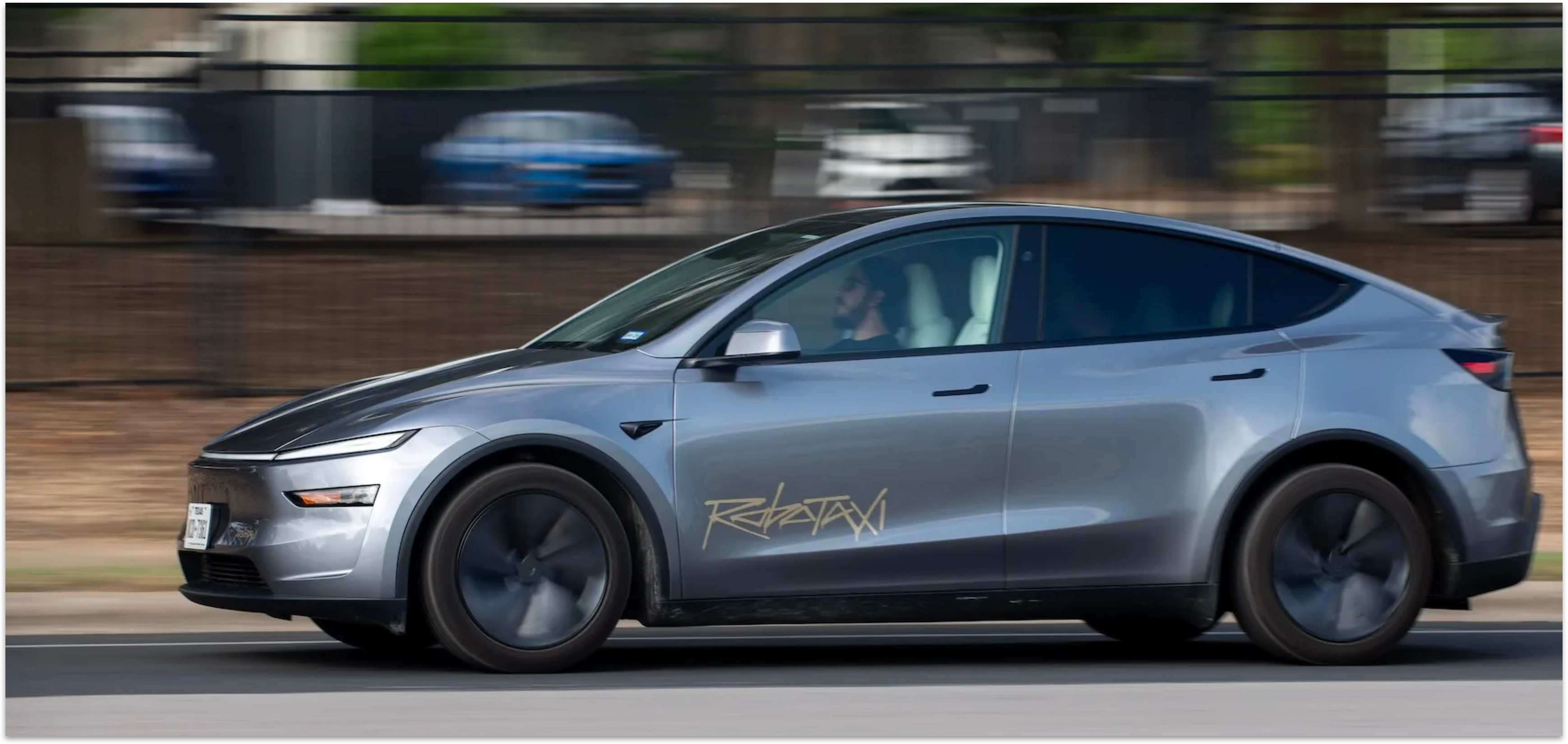
✨ Tesla (TSLA) — Robotaxis under remote teleoperator control have crashed at least twice in Austin, Texas. One incident in July 2025 involved hitting a metal fence after mounting a curb; another in January 2026 struck a construction barricade at 9 mph.
✨ Apple (AAPL) — Shares continue to show strong post-earnings momentum after a record Q2 beat driven by iPhone sales and Services strength. The stock traded above the $290–$300 range this week amid optimism around China recovery and upcoming AI features in iOS 27.
✨ Broadcom (AVGO) — Wells Fargo raised its price target sharply to $545 (from $430), citing AI semiconductor demand running 30–40% above consensus. Strong custom AI silicon partnerships (especially with Meta) keep the stock in growth mode.
✨ AMD (AMD) — Shares hit fresh all-time highs after blockbuster Q1 results and raised guidance, powered by surging AI data center demand. CEO Lisa Su highlighted strong momentum in both CPUs and accelerators.
✨ Cisco (CSCO) — The company announced a 5% workforce cut (~4,000 jobs), yet shares surged 18% after beating expectations on strong AI infrastructure demand. CEO Chuck Robbins emphasized the need for “focus and urgency” and “making hard decisions” in the AI era.
✨ Figma (FIG) — The design software company reported strong Q1 results with accelerating revenue growth, fueled by new AI-powered features and tiered pricing. Shares rose more than 8% post-earnings, reflecting confidence in its AI-native strategy. (Mid-May 2026)
✨ Alibaba (BABA) — Alibaba Cloud is on track to hit $4.4 billion in annualized AI revenue by the end of 2026, driven by surging enterprise demand for its large language models and AI infrastructure. (May 14)
Private Company Leaders 🚀
🚀 OpenAI — On May 11, OpenAI launched its new $4 billion OpenAI Deployment Company (valued at $10 billion pre-money) to accelerate enterprise AI adoption. The venture is backed by a consortium including Bain, McKinsey, Goldman Sachs, and SoftBank. The company also faces ongoing tensions with Apple, including potential legal action over their ChatGPT integration partnership.
🚀 OpenAI — Frustrated with Apple’s underperforming ChatGPT integration in Siri and Visual Intelligence, OpenAI has hired lawyers and is preparing a potential breach-of-contract notice. The 2024 partnership has fallen well short of subscriber and revenue projections, with key features reportedly buried.
🚀 Anthropic — Signed a major compute and usage deal with SpaceX, further positioning itself as the preferred AI partner for Musk’s launch and infrastructure ecosystem. (May 6)
🚀 xAI / SpaceXAI — Continues deepening integration with SpaceX under the new SpaceXAI branding.
“The lowest-cost place to put AI will be in space within 2–3 years, using solar and orbital infrastructure to avoid Earth-grid constraints.”
— Elon Musk (May 8)
🚀 SpaceXAI — More than 50 employees have reportedly departed since February, raising concerns about burnout, leadership changes, talent poaching, and weakened retention after recent liquidity events.
🚀 Figure AI — Conducted a high-profile live demo of its Figure 03 / Helix-02 robots performing fully autonomous, multi-hour package-sorting shifts (up to 17 hours), processing thousands of packages with zero teleoperation. CEO Brett Adcock directly addressed public skepticism. (May 14–15)
🚀 Stripe — Announced a new payment-agent integration with AWS’s AgentCore, powered by its Privy money-laundering detection engine for AI-driven checkout flows. Stripe has also deepened its partnership with ElevenLabs for AI voice capabilities.
🚀 Perplexity AI — Opened its AI Personal Computer on Mac to all users, making its desktop AI agent available to Pro and Max subscribers. (May 6)
🚀 Waymo & Uber — Their autonomous ride-sharing partnership continues to serve as the leading benchmark for urban autonomy deployments, with new cities closely watching ahead of potential expansions. (May 10)
🚀 Notion — Transforming from a note-taking app into a central AI agent hub where humans and agents collaborate seamlessly. The company is expanding custom AI agents that connect with external tools while enabling automated multi-step workflows pulling live data from databases like Salesforce, Zendesk, and Postgres.
Blockchain & Crypto 🔗
🔗 Clarity Act Advances in Senate — Major win for the industry. The Digital Asset Clarity Act cleared the Senate Banking Committee on May 14 by a 15-9 vote.
🔗 Gemini, Kraken, and Coinbase have been actively lobbying to remove restrictive anti-manipulation provisions to make small-token listings easier. The bill now heads toward the full Senate. (May 14)
🔗 Kraken Cuts Staff — Kraken’s parent company Payward is laying off ~150 employees as it streamlines operations and pauses IPO plans amid softer market conditions. The move aims to cut costs and improve efficiency. (Recent)
🔗 Circle raises funding at $3 billion valuation for Arc Blockchain. Shares of the stablecoin issuer jumped 16% after it reported 20% revenue growth.
🔗 Bitcoin Pullback Continues — BTC slipped below $78K this week (currently hovering near $77K), with ETF outflows hitting a record $635 million in a single day on May 13. Ethereum underperformed, dropping ~5%. Market sentiment (Fear & Greed Index) fell into the fear zone. (May 12–19)
🔗 SEC Eyes Tokenized Stocks — Bloomberg reports the SEC is preparing a framework that could allow crypto exchanges to trade tokenized versions of traditional stocks (e.g., Apple, Amazon). This would be a major step toward bridging TradFi and crypto markets. (May 19)
🔗 Tokenized Treasuries Hit Record — On-chain tokenized U.S. Treasuries surpassed $15 billion in total value this week, showing continued strong institutional adoption of real-world asset (RWA) tokenization.
For Your Entertainment 🍿
🎭 YouTube Goes All-In on Premium TV-Style Shows
YouTube is aggressively courting traditional TV ad dollars by promoting high-end “shows” from top creators. The platform is offering advertisers direct ad inventory in longer-form series like Kareem Rahma’s Keep The Meter Running and Alex Cooper’s Call Her Daddy — without funding the content itself. Goal: higher CPMs and brand-safe placements while protecting its UGC core. Early advertiser feedback is strong, though viewership is still modest. (May 15)
🎭 Netflix Accelerates Sports Push
Netflix is rapidly scaling its live sports strategy. In its recent advertiser presentation, the company highlighted a new multi-year NFL deal (five games), plus baseball, combat sports, and the Westminster Dog Show. With its ad-tier expanding to 15 new markets, sports are becoming a major revenue driver. Analysts expect Netflix to eventually spend billions annually on rights. (May 14)
🎭 Cannes Film Festival Kicks Off
The 79th Cannes Film Festival launched on May 12 and runs through May 23. Early buzz has been strong for several competition films, with notable ovations for select entries. Hollywood attendance appears lighter than usual this year. (May 12–19)
🎭 Taylor Swift & Beyoncé Honored
Taylor Swift’s 1989 and Beyoncé’s work received major recognition this week, highlighting their continued cultural dominance in music and entertainment. (Mid-May)
🎭 Conan O’Brien to Host Oscars Again
Conan O’Brien will return as host of the 99th Academy Awards in 2027, marking his third time behind the podium. (May 12)
Current Entrepreneurial Wisdom💡
On Leadership & Intelligence
“In healthcare, biotech, and cleantech, the unfair advantage will be which lab or startup can iterate R&D faster via AI‑co‑pilots and closed‑loop simulations.”
— Lisa Su, CEO, AMD (May 16)
“Raw intelligence alone does not make someone a better leader… effective leadership requires understanding people, matching their perspective, and moving groups in sync.”
— Marc Andreessen, CoFounder, Andreessen Horowitz (May 14)
“AI‑driven compliance, risk‑modeling, and on‑chain analytics will define the next era of trust in fintech, DeFi, and blockchains.”
— Vitalik Buterin, Co‑Founder, Ethereum
“Constantly think about how you could be doing things better and question yourself. The biggest mistake is not seeking out negative feedback.”
— Elon Musk, Founder &CEO, Tesla & SpaceX (May 8)
“AI will be 10× faster than prior industrial revolutions; treat this as a 10‑year infrastructure‑buildout, not a short‑term hype cycle.”
— Sundar Pichai, CEO, Alphabet (May)
“The world was spending about $400B/year on classical computing; the AI‑scale demand is orders of magnitude higher. AI factories” are the new kind of infrastructure: clusters of chips, networking, and software that resemble manufacturing plants more than data centers.”
— Jensen Huang, CEO, Nvidia (May 4)
“Multi‑agent ‘contemplating mode’ architectures—running multiple reasoning agents in parallel—will push frontier‑task performance beyond single‑turn chat.”
— Mark Zuckerberg, Founder & CEO, Meta
“Don’t ask what I would do; just do the right thing—and focus relentlessly on where you spend your time, because that’s the most important decision any CEO makes.”
— Tim Cook, CEO, Apple
“The winners in AI will be the companies that treat AI as a permanent, embedded R&D and operating layer, not as a feature‑of‑the‑quarter.”
— Demis Hassabis, CEO, Google DeepMind
